Who is involved
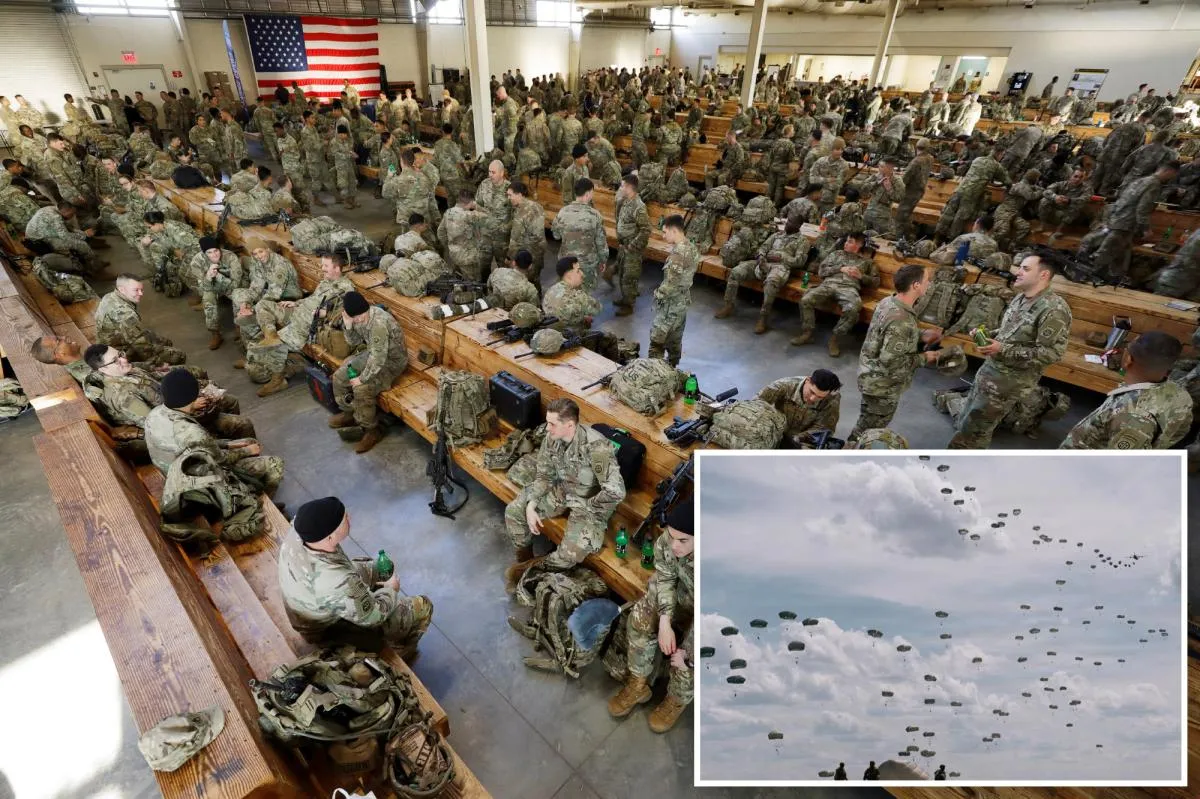
The 82nd Airborne Division, a key asset of the US Army, is known for its rapid deployment capabilities. Historically, this division has been on high alert, ready to respond to global conflicts within hours. Prior to the recent developments, the expectation was that the division would maintain its readiness without immediate deployment orders. However, the situation has changed significantly with the announcement of a potential deployment to the Middle East.
On March 24, 2026, the White House revealed plans to deploy around 3,000 soldiers from the 82nd Airborne Division in support of Operation Epic Fury. This operation is part of a broader strategy involving military actions in Iran, which has raised concerns about escalating tensions in the region. The division’s ability to deploy approximately 3,000 troops anywhere in the world within 18 hours underscores its importance in rapid response scenarios.
In addition to the 82nd Airborne Division, the Pentagon is also expected to announce the deployment of a 3,000-person brigade combat team from this elite unit. This decision comes amidst ongoing military operations, including the dispatch of 2,500 Marines to the Middle East, indicating a significant buildup of U.S. forces in the region.
The immediate effects of this deployment are multifaceted. For the 82nd Airborne Division, this marks a critical moment as it prepares for potential engagement in a complex geopolitical landscape. The division is designed to be a rapid-response team, capable of deploying a battalion within 18 hours and a full brigade within 72 hours. This capability is crucial as the U.S. aims to project power and support its allies in the face of Iranian activities.
Experts have noted that the 82nd Airborne Division’s deployment could have significant implications for U.S.-Iran relations. President Trump has not ruled out putting U.S. boots on the ground in the region, a statement that reflects the administration’s willingness to take decisive military action. The potential for increased military presence raises questions about the long-term strategy and objectives of U.S. forces in the Middle East.
Furthermore, the strategic importance of the region cannot be understated. Kharg Island, located just 5 miles off the Iranian coast, handles 90 percent of Iran’s oil exports. This geographical significance adds another layer of complexity to the military operations planned in the area. The deployment of the 82nd Airborne Division could be aimed at securing vital interests and ensuring stability in a region that is often fraught with conflict.
Details remain unconfirmed regarding the exact timeline of the deployment and the specific roles the troops would play if sent to the region. As the situation evolves, the focus will remain on how these developments impact both U.S. military strategy and regional dynamics.
In summary, the deployment of the 82nd Airborne Division to the Middle East represents a significant shift in U.S. military posture. With the ability to respond rapidly to emerging threats, the division’s involvement in Operation Epic Fury highlights the ongoing complexities of U.S. engagement in the region and the potential for heightened military activity in the coming weeks.