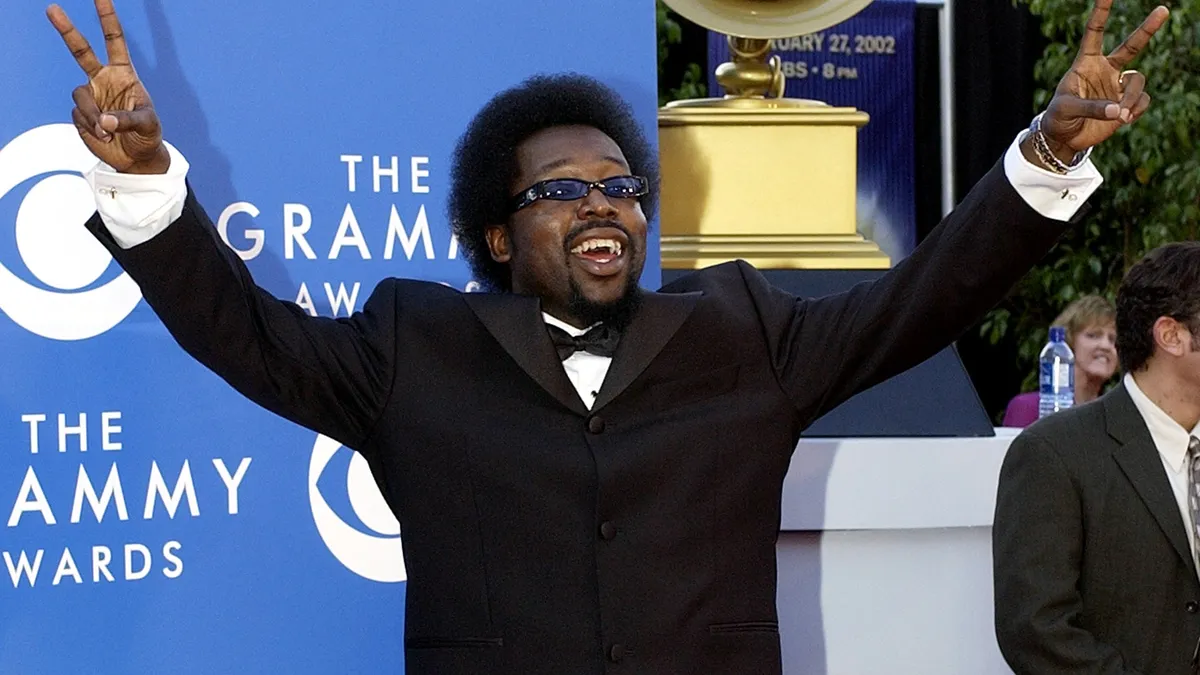
“If you watched my trial today, you could clearly see that judge jackass jonathan help the pedophile police,” stated Afroman, whose real name is Joseph Foreman, as he addressed the ongoing legal battle in Adams County, Ohio. The trial, which began on March 17, 2026, is expected to last four days and revolves around a lawsuit filed by seven deputies from the Adams County Sheriff’s Office.
The deputies are suing Afroman for defamation and invasion of privacy, stemming from his viral music video “Lemon Pound Cake.” This video features footage from a police raid conducted at Afroman’s home in August 2022, which was based on a confidential informant’s claims of drug trafficking and kidnapping. However, no charges were filed against Afroman following the raid, and nothing illegal was discovered.
Afroman asserts that he was exercising his right to free speech by creating art from the footage of the raid. He has since released multiple songs and videos related to the incident, including “Will You Help Me Repair My Door.” The deputies claim they have suffered emotional distress and public humiliation as a result of Afroman’s videos, and they are seeking damages.
The American Civil Liberties Union (ACLU) has intervened in the case, arguing that the officers are attempting to stifle criticism of public officials on a matter of public concern. An ACLU representative stated, “There is nothing the First Amendment protects more jealously than criticism of public officials on a matter of public concern.”
In addition to the lawsuit from the deputies, Afroman has filed his own lawsuit for property damage against the sheriff’s office, which was dismissed in February 2026. He claims that during the raid, $400 went missing from cash that was seized, further complicating the narrative surrounding the incident.
As the trial progresses, the Foundation for Individual Rights and Expression commented, “The officers have an uphill battle.” Afroman’s supporters argue that the case is a significant test of free speech rights, especially in the context of artistic expression.
Details remain unconfirmed regarding the specific evidence that will be presented during the trial, but the public attention surrounding the case continues to grow. The outcome could have implications not only for Afroman but also for the broader discourse on the intersection of art, criticism, and law enforcement.
As the trial unfolds, Afroman’s statements and the deputies’ claims will be closely scrutinized, with both sides preparing for a legal showdown that could set precedents in similar cases in the future.