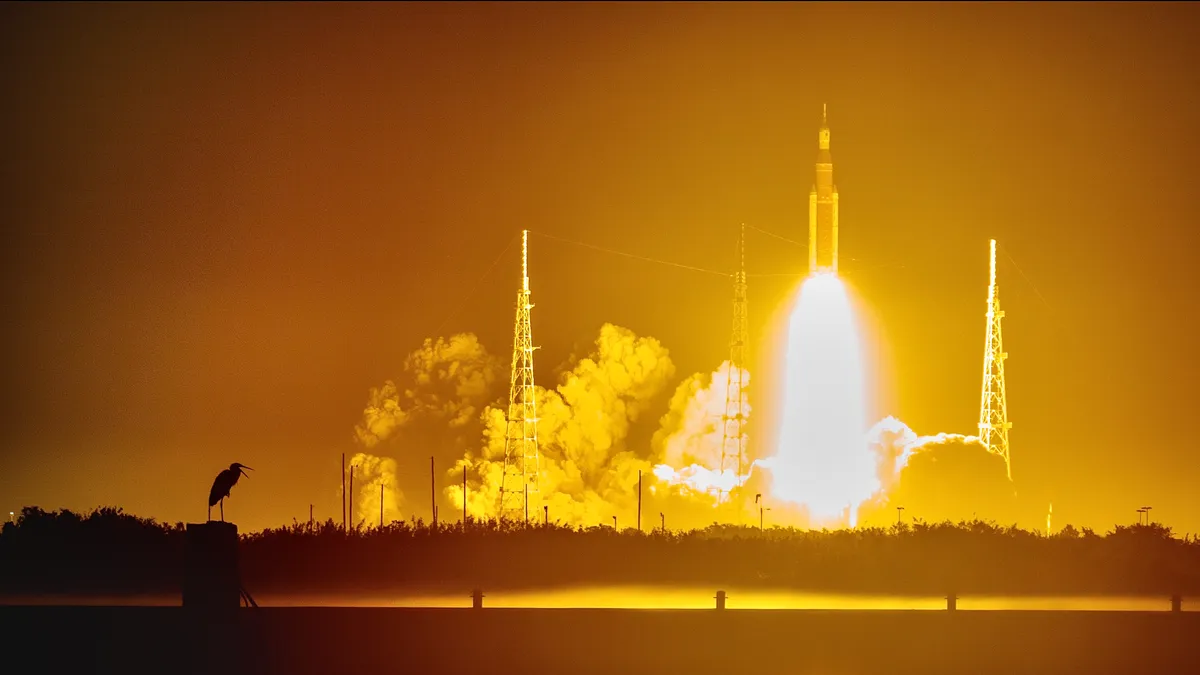
NASA has announced that the Artemis 2 launch is scheduled for April 1, 2026, at 6:24 p.m. ET from the Kennedy Space Center in Florida. This mission will mark the first crewed flight to the moon in 53 years, following the Apollo missions that concluded in 1972.
The Artemis 2 mission will last nearly 10 days, culminating in a splashdown in the Pacific Ocean. While it will not land on the moon, the mission will involve a flyby, bringing the crew closer to the lunar surface than any humans have been since the Apollo program.
The Space Launch System (SLS) rocket, which will carry the crew, stands at 322 feet tall and generates 8.8 million pounds of thrust. This launch will be a significant milestone, as it will be the first time humans fly on the SLS and the Orion capsule.
Three of the four astronauts on the Artemis 2 mission are set to make history: Victor Glover will be the first Black man, Christina Koch the first woman, and Jeremy Hansen the first Canadian to venture near the moon. Glover expressed the importance of representation, stating, “Girl power and that’s awesome, and that young brown boys and girls can look at me and go ‘Hey, he looks like me and he’s doing what???'”
Nasa has not launched humans beyond Earth orbit since the Apollo 17 mission in 1972, making this upcoming launch a pivotal moment in space exploration. The Artemis 2 mission aims to establish a base on the moon and eventually facilitate human missions to Mars.
NASA forecasts an 80% chance of favorable weather conditions for the launch, with approximately 400,000 people expected to gather on the Space Coast to witness the historic event. If the launch does not occur on April 1, there are six additional launch windows available.
As the launch date approaches, NASA plans to stream the event live on its YouTube channel, inviting the public to be part of this historic mission. The crew will spend the first day testing Orion’s life-support systems, ensuring everything is ready for their journey.
Details remain unconfirmed regarding any last-minute changes to the launch schedule, but the excitement surrounding the Artemis 2 mission continues to build as it promises to usher in a new era of human space exploration.