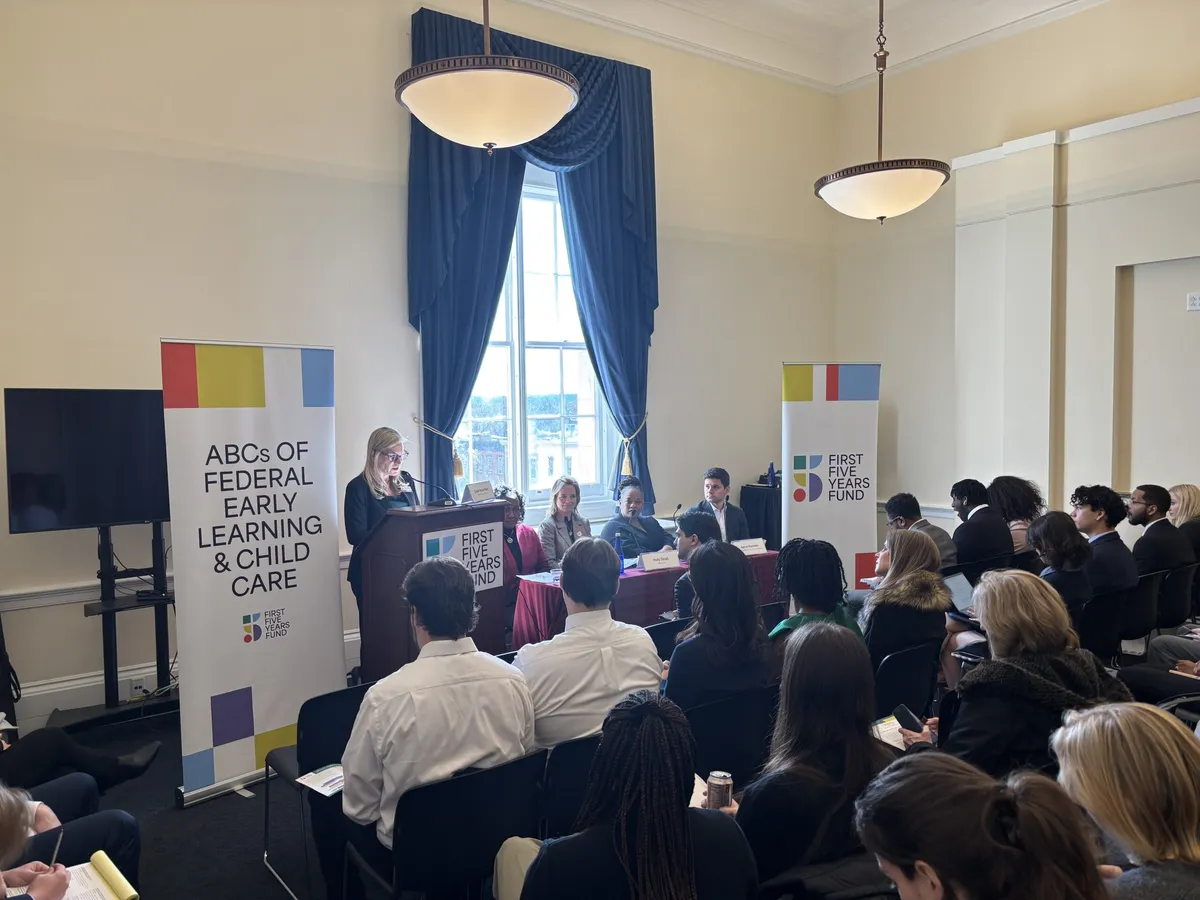
“Child care and early childhood education is what makes every type of work possible… The best investment we can make is early childhood,” stated Rep. Suzanne Bonamici (D-OR) during a recent briefing hosted by the First Five Years Fund in Washington, D.C. This statement encapsulates the growing recognition of child care as a critical component not only for families but also for the broader economy.
The briefing highlighted the importance of federal early learning and child care programs, including the Child Care and Development Block Grant (CCDBG), which is essential for making affordable child care accessible to families. Federal programs support nearly 2 million young learners each year, underscoring the necessity of these initiatives in fostering early childhood development.
As child care costs can often exceed housing expenses for families, the financial burden has become a significant issue. Sondra Goldschein, a participant in the discussion, remarked, “When child care can cost more than your rent or a mortgage, or you have to sacrifice a paycheck in order to be able to take care of a loved one, that can motivate how people vote.” This sentiment reflects the urgent need for affordable child care solutions, especially in the wake of the pandemic, which laid bare the industry’s precarity and necessity.
Trina Averette, a child care provider, shared her experience, stating, “Over my 30 years, 90% of the families enrolled have had to use CCDBG. Without the subsidy, they would not be able to enroll their children in my program.” This highlights the reliance of many families on federal support to access quality child care services.
Moreover, the Campaign for a Family Friendly Economy has announced plans to invest $50 million to support Democratic candidates in congressional races, emphasizing child care as a pivotal issue in upcoming elections. Candidates are increasingly centering their campaigns around child care affordability, recognizing its impact on voters’ decisions.
In 2021, Congress passed $39 billion in aid for child care, a significant step towards addressing the challenges faced by families. However, waiting lists for federal child care subsidies continue to grow, indicating that many families still lack access to the support they need. Currently, child care programs reach only a portion of qualifying families, leaving many without the necessary resources.
As discussions around child care continue, it remains a strong bipartisan issue. Federal programs like CCDBG, Early Head Start, and Head Start provide crucial support to young learners, and the importance of these initiatives is more apparent than ever. With 90% of a child’s brain growth occurring before kindergarten, investing in early childhood education is vital for future success.
What observers say
As the landscape of child care evolves, the need for comprehensive solutions becomes increasingly urgent. The Biden administration’s proposal suggests that families should ideally spend no more than 7% of their household income on child care, a goal that many advocates are pushing for. Additionally, Republicans have made moves to expand eligibility for child care tax credits, potentially benefiting 4 million more families. The ongoing dialogue around child care affordability and accessibility is expected to shape policy decisions in the near future.