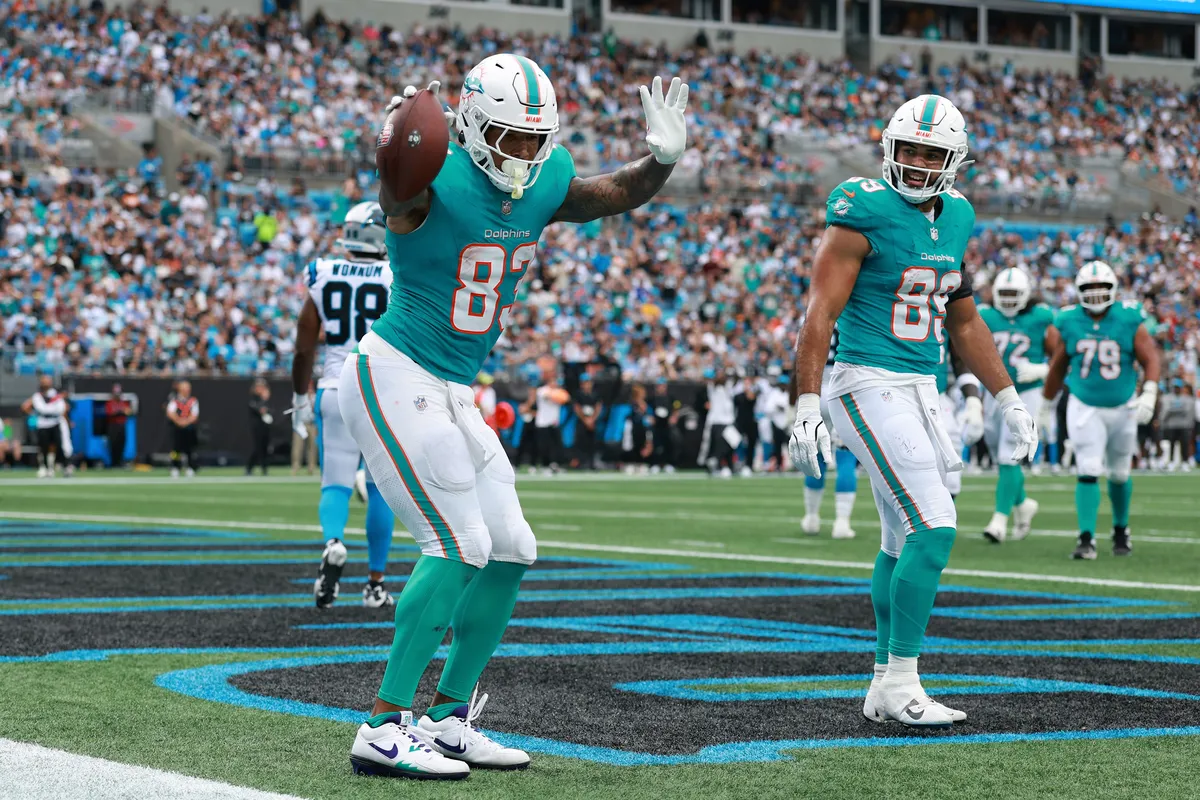
The Miami Dolphins’ wide receiver depth chart has faced a dramatic overhaul following the recent trade of star receiver Jaylen Waddle to the Denver Broncos. Previously, Waddle was a key component of the Dolphins’ offense, recording 64 receptions for 910 yards and 6 touchdowns in the last season. His departure marks a significant shift in the team’s offensive strategy and personnel.
The decisive moment came on March 17, 2026, when the Dolphins finalized the trade, which included substantial compensation: a first-round pick, a third-round pick, and a fourth-round pick swap. This move not only reflects the Dolphins’ willingness to reshape their roster but also highlights their current financial challenges, with over $100 million in dead cap hits affecting their budget.
In the wake of Waddle’s exit, the Dolphins’ wide receiver depth chart now features Jalen Tolbert, Tutu Atwell, and Malik Washington as starters, with Washington being the only returning player among them. This shift has led analysts to label the Dolphins’ receiving corps as one of the weakest in the NFL, raising concerns about their ability to compete effectively in the upcoming season.
Furthermore, the Dolphins have also moved on from other top pass-catchers, including Tyreek Hill, which compounds the challenge for the team’s new quarterback, Tua Tagovailoa. With the current roster, the Dolphins are expected to draft at least one wide receiver this offseason to bolster their options.
On the other hand, the Broncos have strengthened their receiving corps with the addition of Waddle, joining established players like Courtland Sutton, who recorded over 1,000 yards last season, and newcomers Troy Franklin and Pat Bryant. This acquisition is expected to enhance the Broncos’ passing game, which already had impressive stats, including 3,931 passing yards and 25 touchdowns in the 2025 season.
As the Dolphins navigate this new era, they will rely heavily on De’Vone Achane to carry a significant load in their offense. The team’s management faces the challenge of rebuilding a competitive wide receiver unit while managing the financial implications of their recent trades.
Experts suggest that the Dolphins’ strategy will be closely watched as they attempt to recover from the loss of key players and reshape their identity. The upcoming draft will be crucial for the Dolphins to address their wide receiver needs and improve their standing in the league.
Details remain unconfirmed regarding further trades or acquisitions as the offseason progresses, but the Dolphins’ current trajectory indicates a significant shift in their approach to building a competitive roster.