Who is involved
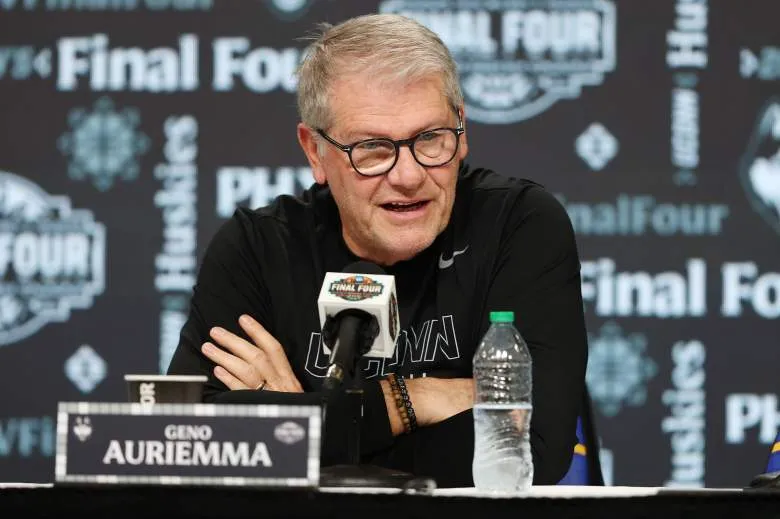
Geno Auriemma, the head coach of the University of Connecticut (UConn) women’s basketball team, has long been a dominant figure in the sport, having won 12 national championships, the most of any men’s or women’s college basketball coach. His coaching tenure has set a high standard in women’s basketball, which has been increasingly recognized in terms of financial compensation for coaches. However, the landscape of coaching salaries has shifted dramatically in recent years, particularly with the emergence of other successful coaches such as Dawn Staley of South Carolina.
Before the recent developments, Auriemma’s salary was seen as a reflection of his unparalleled success in women’s college basketball. His base salary was $400,000 per year, with a total contract value of $18.7 million over five years. This figure, while substantial, was beginning to be overshadowed by the rising salaries of other coaches in the field. The expectation was that Auriemma would maintain his status as one of the highest-paid coaches, given his track record and the prestige of the UConn program.
However, a decisive moment came when Dawn Staley became the highest-paid coach in women’s college basketball history in January 2025, with a base salary of $4.25 million for the 2025-26 season. This shift not only highlighted the changing dynamics of coaching salaries but also raised questions about Auriemma’s compensation in comparison to his peers. As Staley’s contract runs through the 2029-30 season, it set a new benchmark for what top-tier coaches could command.
The immediate effects of this shift have been notable. Auriemma’s reported salary for the 2025-26 season is $3.54 million, which includes additional compensation starting at $2.94 million in the 2024-25 season, increasing by $200,000 each subsequent year. Additionally, he earned $250,000 in bonuses for reaching the Final Four in 2026. While these figures are impressive, they still fall short of Staley’s base salary, underscoring the competitive nature of coaching salaries in women’s basketball.
Experts in sports management have noted that the increase in coaching salaries reflects not only the success of individual programs but also the growing popularity and visibility of women’s sports. Dawn Staley’s comment, “UConn has been the standard in women’s basketball for a very long time, and everyone has to measure up to their standard,” emphasizes the historical significance of UConn’s success and the pressure on Auriemma to adapt to the evolving landscape.
As the conversation around coaching salaries continues, it is clear that Auriemma’s compensation will be scrutinized in light of Staley’s achievements and the broader trends in women’s college basketball. The financial stakes are higher than ever, and the competition among programs is intensifying, leading to a reevaluation of what top coaches are worth.
Details remain unconfirmed regarding any potential adjustments to Auriemma’s contract in response to these changes. However, the ongoing discourse surrounding coaching salaries suggests that this is a pivotal moment in the realm of women’s college basketball, with implications for both current and future coaching contracts.