Prior Expectations
In the lead-up to the FIBA Men’s Caribbean Championship scheduled for July, Guyana was expected to showcase its basketball prowess, particularly with a series against Grenada. This series was seen as a crucial part of the national team’s preparations, aimed at building momentum and team cohesion.
Decisive Moment
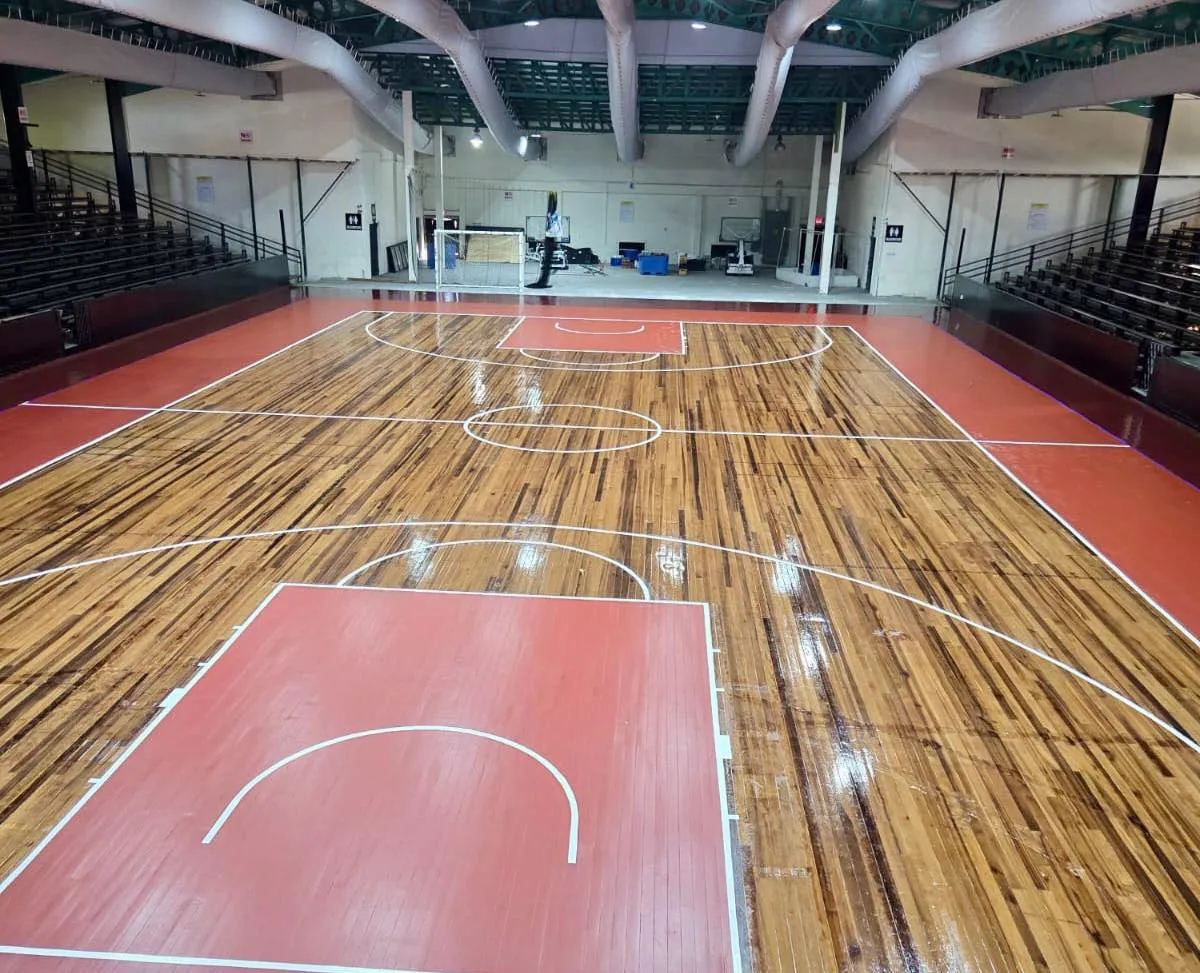
However, the opening game of the series was abruptly cancelled due to an unfit playing surface at the Cliff Anderson Sports Hall. The court, recently painted, had not properly dried, rendering it unsafe for play. This unexpected cancellation has raised concerns about the readiness of the facilities as the championship approaches.
Direct Effects
The cancellation not only disrupts the team’s training schedule but also affects the morale of players and fans alike. The Guyanese team, led by coach Charles Ramson, now faces the challenge of regrouping and finding alternative ways to prepare for the championship.
Expert Perspectives
In a broader context, the situation reflects ongoing issues within Guyana’s sports infrastructure. As noted by local artist Gem Madhoo-Nascimento, there are calls for modern copyright legislation to protect the rights of creatives, which parallels the need for improved facilities in sports. The outdated 1956 British Copyright Act remains a significant obstacle for artists, indicating a larger trend of neglect in various sectors.
Madhoo-Nascimento emphasized the need for government action, stating, “The government needs to place some emphasis on this and to take it forward and to make it happen and in place.” This sentiment resonates not only in the arts but also in sports, where proper facilities are essential for success.
Moreover, the recent meeting between President Dr. Irfaan Ali and US Secretary of Energy Chris Wright highlights Guyana’s strategic importance in energy production. Wright described Guyana as a “well-governed” country with vast energy resources, which could potentially provide the necessary support for improving infrastructure across various sectors, including sports.
As Guyana navigates these challenges, the focus remains on enhancing energy security and fostering sustainable growth. Wright’s comments about Guyana’s role in the US strategy for energy production underscore the potential for future collaboration that could benefit multiple sectors.
While the immediate future of the basketball series remains uncertain, the broader implications of infrastructure development and legislative reform are clear. The need for modern facilities and protections for creatives is critical as Guyana strives to position itself as a leader in both sports and the arts.
Details remain unconfirmed regarding the rescheduling of the cancelled game, but the urgency for reform and improvement in Guyana’s sports infrastructure is evident.