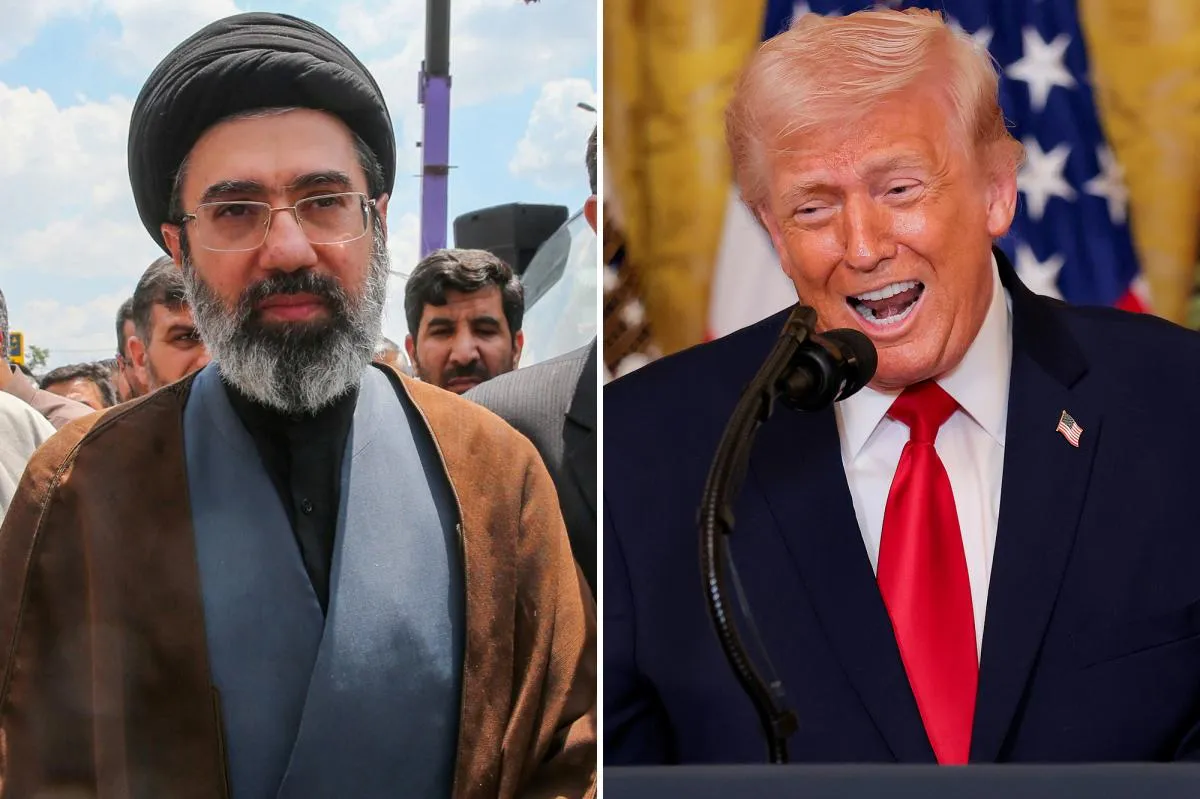
Mojtaba Khamenei was selected to replace his father, Ali Khamenei, as Iran’s supreme leader on March 8, 2026, at the age of 56. His ascension to this powerful position comes amidst significant turmoil, including personal tragedies and health concerns following an airstrike that occurred on February 28, 2026.
US intelligence reports suggest that Mojtaba Khamenei may be gay, a revelation that has raised eyebrows given the legal and social ramifications of such an orientation in Iran, where homosexual conduct is illegal and carries severe penalties. This aspect of his personal life has reportedly been a source of concern for his father, who feared his son’s suitability to rule.
In a tragic turn of events, Mojtaba Khamenei’s wife and son were reportedly killed in the airstrike that also left him injured. Following the attack, he was secretly flown to Moscow for medical treatment, raising questions about his health and ability to lead. Since his appointment, he has not made a public appearance, and his first official statement was released in written form without audio or video, further fueling speculation about his condition.
The numbers
Mojtaba Khamenei has two children from his current marriage and was married at the age of 30. His personal life has been scrutinized, particularly after a classified US diplomatic cable from 2008 mentioned his medical treatment. Observers note that he needed multiple visits to the UK for medical care, with one report indicating he required a fourth visit shortly after the airstrike.
In the wake of these events, US President Donald Trump expressed uncertainty about Khamenei’s health and leadership status, stating, “We don’t know who we’re dealing with in Iran.” This sentiment reflects the broader concerns among international observers regarding the stability of Iran’s leadership during this critical period.
As the situation unfolds, details remain unconfirmed regarding Mojtaba Khamenei’s current whereabouts and the status of his recovery from the airstrikes. The exact nature of his injuries and their potential impact on his leadership capabilities remain uncertain, leaving many to speculate about the future direction of Iran under his rule.
In the meantime, the political landscape in Iran continues to evolve, with recent airstrikes resulting in the deaths of nine Iran-backed fighters in Iraq, further complicating the regional dynamics. The implications of Mojtaba Khamenei’s leadership, particularly in light of his personal challenges and the ongoing geopolitical tensions, will be closely monitored by both domestic and international observers.