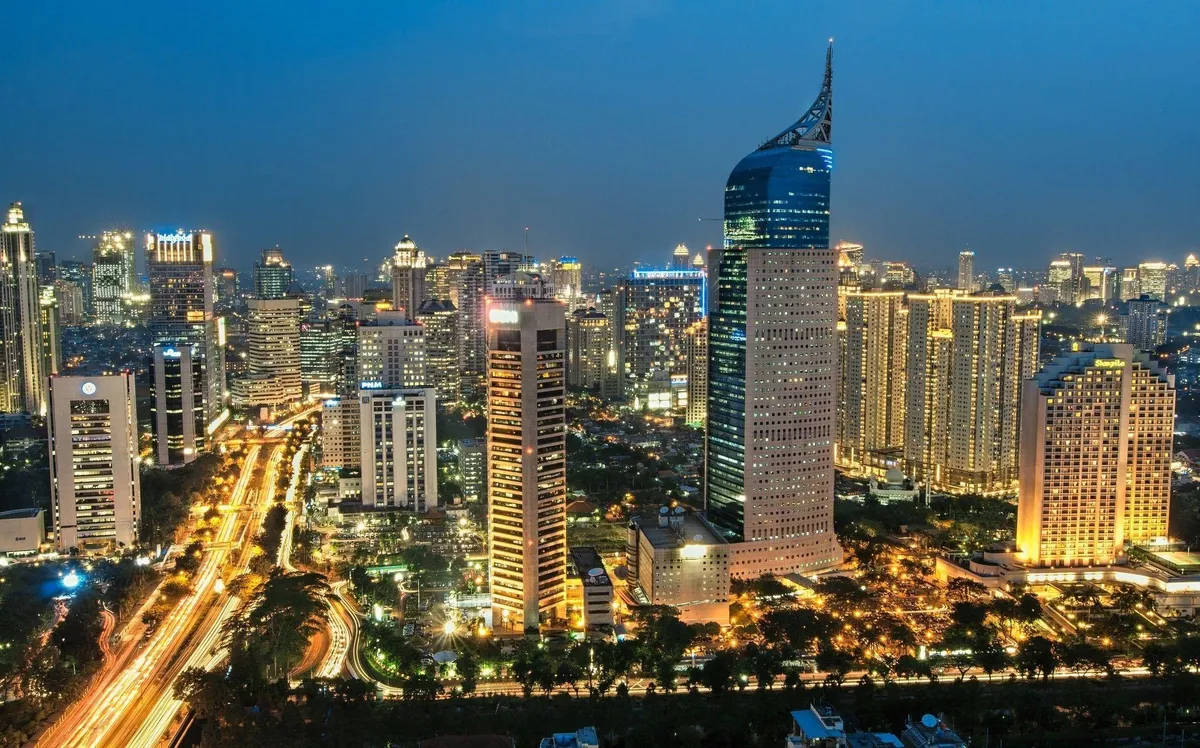
Jakarta, Indonesia, has long been recognized as the world’s most populated city, with a staggering population of 42 million people. However, prior to recent developments, the city was expected to continue its growth trajectory without significant intervention. The rapid urbanization that has transformed Jakarta from a mere 150,000 residents in the early 20th century to over 31 million by 2024 was seen as a testament to its economic vitality.
Yet, this growth has come at a cost. Jakarta is sinking at an alarming rate, with some areas dropping as much as six inches per year. Approximately 40 percent of the city is below sea level, and experts warn that nearly half of Jakarta could become uninhabitable by 2050 due to rising sea levels, which have increased by four inches over the last three decades.
The decisive moment came during the catastrophic flooding in 2020, which resulted in the deaths of more than 60 people and highlighted the urgent need for action. In response, Jakarta’s government announced ambitious plans for a 435-mile seawall project aimed at protecting the city from further inundation.
Experts like M. Abdul Baits have pointed out that while relocating the capital may seem like a solution, it does not address the underlying environmental and social issues that Jakarta faces. “Relocating the capital does not address the root environmental and social problems. Those issues remain unresolved,” he stated.
As the city grapples with these challenges, voices from the community, such as Ratini, emphasize the immediate impact of flooding: “The water can reach thigh high. Cars and motorcycles can’t enter the area.” This stark reality underscores the urgent need for effective infrastructure and environmental policies.
Joko Widodo, the President of Indonesia, has acknowledged the scale of the seawall project, stating, “This is a massive project with a timeline of 15 to 20 years. This isn’t a one- to two-year project.” The commitment to long-term solutions reflects the severity of Jakarta’s situation.
In the meantime, the city continues to face the consequences of its rapid growth and environmental neglect. A third of Jakarta is supposed to be green, open space, but in reality, less than 5 percent exists. This discrepancy exacerbates the challenges posed by climate change and urban development.
As Jakarta moves forward, the interplay between its population growth and environmental sustainability will be crucial in determining the city’s future. The ongoing developments will be closely monitored, as the stakes are high for the millions who call Jakarta home.