What observers say
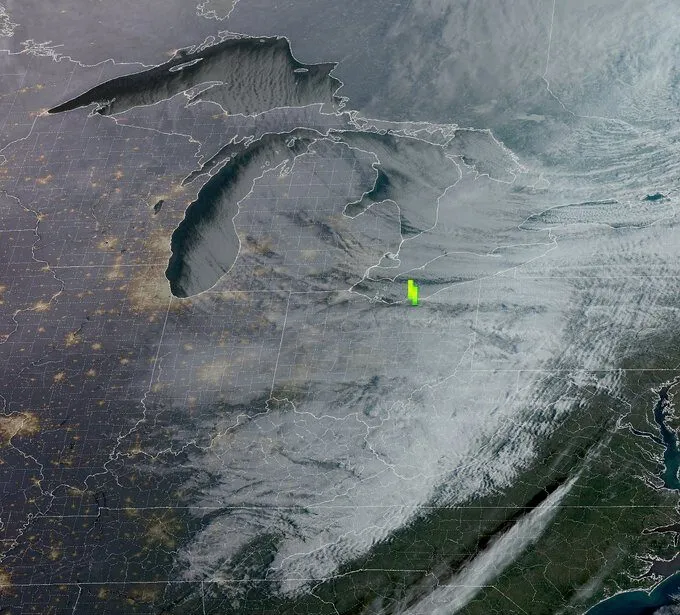
“We’re receiving reports across western Pennsylvania and eastern Ohio of a loud boom and a fireball in the sky,” stated a representative from NWS Pittsburgh following the meteor event that occurred on March 17, 2026, at approximately 9 a.m. EDT. This rare celestial occurrence has captivated the attention of residents and scientists alike, as the National Weather Service confirmed the event using satellite imagery.
The meteor, which was nearly 6 feet in diameter and weighed about 7 tons, entered the atmosphere at an astonishing speed of 45,000 mph. Witnesses described the phenomenon as producing a sonic boom and a fireball visible from as far away as Canada and Virginia. The energy released upon fragmentation was equivalent to 250 tons of TNT, creating an impact that resonated throughout the region.
Reports of the loud boom were widespread, with the American Meteor Society receiving over 140 accounts from various locations including Avon, Sandusky, and Mentor in Ohio. The event was so striking that it was described by some witnesses as “earthquake-like,” highlighting the intensity of the sound and the visual spectacle.
The meteor fragmented over Valley City, Ohio, leading to meteorites falling in Medina County. While the event has generated excitement and curiosity, details remain unconfirmed regarding the exact trajectory and impact location of the meteor. As of now, there have been no confirmed reports of meteorites hitting the ground.
In a statement from NWS Cleveland, they noted, “The latest GLM imagery (1301Z) does suggest that the boom was a result of a meteor.” This confirmation has provided some clarity to the event, which has drawn comparisons to the Chelyabinsk meteor event in 2013, where a similar occurrence caused significant damage in Russia.
Sean Misic, a local resident, expressed his astonishment, saying, “I never really expected to see any objects in the sky.” This sentiment reflects the surprise and intrigue that many in the region felt as they witnessed the meteor’s descent.
Brian Mitchell, another observer, remarked, “A boom like this is uncommon in Northeast Ohio,” emphasizing the rarity of such events in the area. The meteor’s visibility and the accompanying sonic boom have sparked discussions about the potential for future celestial events and their implications for local communities.
As investigations continue, the NWS and other agencies are analyzing data to provide further insights into this remarkable event. The excitement surrounding the meteor has not only engaged local residents but has also attracted attention from space enthusiasts and scientists eager to learn more about the phenomenon.