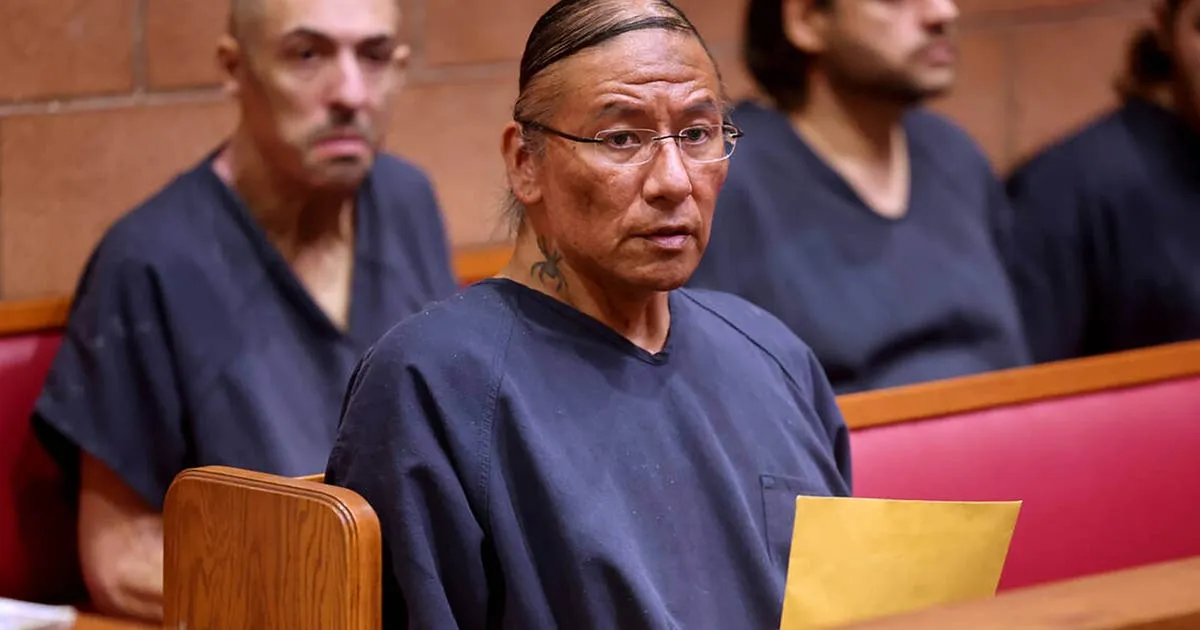
Nathan Chasing Horse, known for his role in ‘Dances With Wolves’, was sentenced to life in prison for a series of sexual assaults spanning two decades. The question arises: how did a celebrated actor become a convicted criminal? The answer lies in his exploitation of vulnerable victims.
A jury found Chasing Horse guilty of 13 out of 21 charges related to sexual assault. The victims included Indigenous women and girls, some as young as 14 years old. He abused his position as a spiritual leader to prey on these individuals. This abuse spanned multiple states, including Nevada, South Dakota, and Montana.
Chasing Horse’s arrest came in 2023 after a monthslong investigation by Las Vegas police. During the raid, authorities discovered memory cards containing videos of the assaults. This evidence played a crucial role in securing his conviction.
Chasing Horse denied the charges, claiming it was “a miscarriage of justice.” He pointed out that he was acquitted on several other sexual assault charges from a later period. Yet, the evidence against him painted a different picture—one of manipulation and deceit.
The case has broader implications. Law enforcement agencies in other states and Canada are now pursuing additional charges against him. A warrant remains outstanding in Alberta, Canada, indicating that this situation may not be over.
Chasing Horse was born on the Rosebud Reservation in South Dakota, home to the Sicangu Sioux. His background as an actor and medicine man allowed him to gain trust within communities—a trust he ultimately betrayed.
Victims have spoken out about their experiences. One victim stated, “I am choosing to see this moment as a fresh start. I will rebuild my life.” Meanwhile, a victim’s mother expressed her ongoing struggle: “Even to this day I struggle to regain my faith and spirituality.” These voices highlight the deep impact of Chasing Horse’s actions.
As the legal process unfolds, British Columbia prosecutors will assess next steps once Chasing Horse’s appeals are exhausted. His case has already prompted discussions about justice for Indigenous women and the need for accountability within communities.