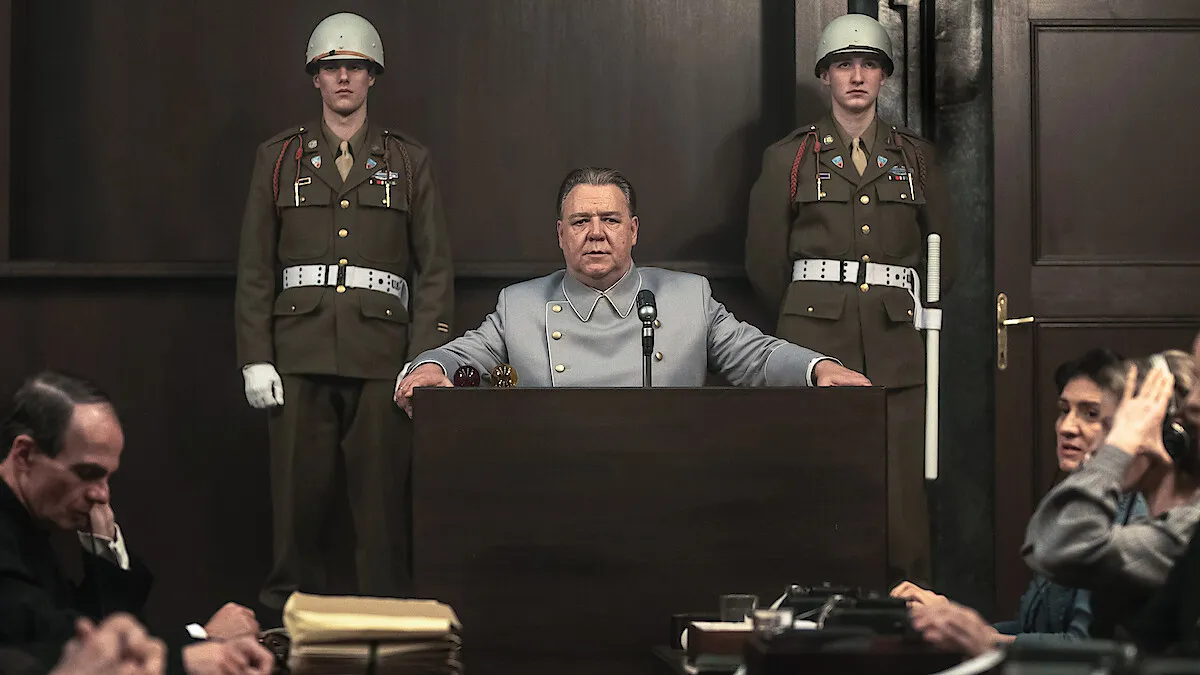
Nuremberg: A New Film Explores the Trials of Nazi Leaders
The film Nuremberg, released on March 7, 2026, on Netflix, dramatizes the historic trials of 22 Nazi leaders who were held accountable for their crimes against humanity. This significant event, which took place between November 1945 and October 1946, marked the first time in history that an international court prosecuted enemy leaders for genocide and war crimes.
Directed by James Vanderbilt, Nuremberg focuses on US Army psychiatrist Douglas Kelley, portrayed by Rami Malek, as he evaluates Nazi prisoners before their trials. Russell Crowe takes on the role of Hermann Göring, one of the most notorious figures of the Nazi regime. Critics have noted Crowe’s performance as one of his best in years, with Peter Bradshaw commenting that he is “rather wittily cast as the portly, pompous Reichsmarschall Göring; it’s the best he’s been for a long time, a sly and cunning manipulator playing psychological cat-and-mouse with the Americans.”
The film, adapted from the 2013 nonfiction book The Nazi and the Psychiatrist by Jack El-Hai, explores profound themes of justice, accountability, and human nature. It has garnered a 71% rating on Rotten Tomatoes and a 7.4/10 rating on IMDb, reflecting a generally positive reception from audiences and critics alike.
In its theatrical run, Nuremberg earned approximately $46 million before transitioning to premium video on demand (PVOD) in December. The film’s runtime is 2 hours and 29 minutes, allowing for an in-depth exploration of the psychological and moral complexities surrounding the trials.
Historically, the Nuremberg Trials were a pivotal moment in international law, setting precedents for how the world would address war crimes and crimes against humanity. As Douglas Kelley noted, “The Hitlers and the Goerings, the Goebbels’ and all the rest of them were not special types,” emphasizing the universal nature of the human capacity for evil.
As audiences engage with the film, they are reminded of the enduring significance of the Nuremberg Trials and the lessons they impart about justice and accountability. The film’s exploration of these themes resonates in today’s context, where discussions about war crimes and human rights continue to be relevant.
Details remain unconfirmed regarding the film’s impact on public discourse about historical accountability. However, the anticipation surrounding Nuremberg suggests that it will contribute to ongoing conversations about the legacy of the trials and their implications for contemporary society.