Prior to recent developments, the US and Iran had been engaged in escalating conflict since the US launched military operations over five weeks ago. The situation was marked by heightened rhetoric and military posturing, with both sides unwilling to compromise. The expectation was that the conflict would continue to intensify without any mediation efforts.
However, on April 7, 2026, Pakistan stepped in to mediate between the two nations, aiming to establish a ceasefire. US President Donald Trump confirmed that Vice President JD Vance is actively involved in these mediation efforts, indicating a significant shift in the approach to the conflict.
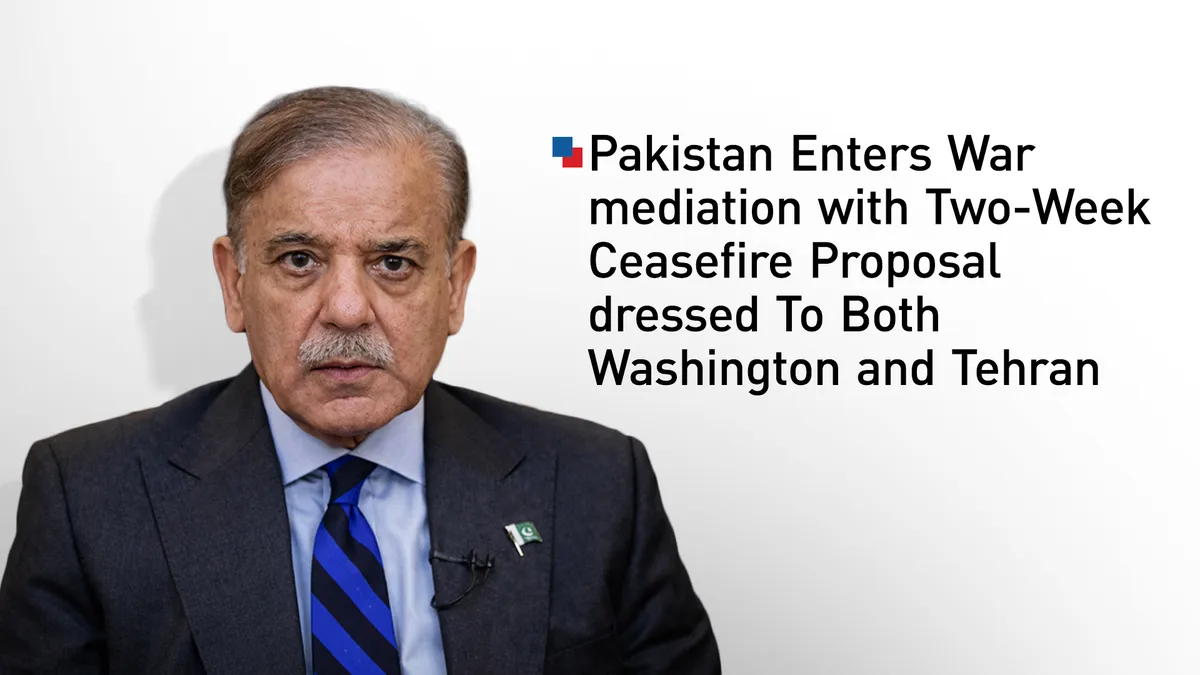
Pakistan’s Prime Minister Shehbaz Sharif has called for a two-week extension of US strike authorization against Iran, while also urging Iran to reopen the Strait of Hormuz as a gesture of good faith. This move highlights Pakistan’s role as a mediator and its strategic interest in stabilizing the region, given that 20 percent of the world’s oil and gas supplies pass through this critical waterway.
Despite these efforts, Iran has rejected the ceasefire proposal from Pakistan, labeling it as ‘illogical’. The Iranian ambassador to Pakistan indicated that the mediation was at a ‘critical, sensitive stage’, suggesting that while there is an opportunity for dialogue, significant hurdles remain.
The mediation framework proposed by Pakistan includes confidence-building measures followed by a formal ceasefire. However, the exact details of these measures are not publicly known, leaving uncertainties about the potential for success.
Trump’s warnings have added urgency to the situation, stating, “A whole civilization will die tonight, never to be brought back again,” as the deadline for Iran looms. This stark warning underscores the high stakes involved in the ongoing negotiations.
Vance’s role in the negotiations is viewed as significant by both the US and Iran, yet the US delegation’s planned visits to Islamabad for discussions have been cancelled, further complicating the mediation efforts.
Experts, including Omani Foreign Minister Badr Al Busaidi, have expressed cautious optimism, stating, “The big picture is that a deal is in our hands.” However, the rejection of the ceasefire proposal by Iran raises questions about the feasibility of reaching an agreement.
As the situation evolves, the direct effects on the parties involved remain to be seen. The potential for a ceasefire could lead to a de-escalation of tensions, but the rejection of proposals thus far indicates a challenging path ahead.
Details remain unconfirmed regarding the next steps in the mediation process, and the outcome remains uncertain as both sides navigate this complex geopolitical landscape.