Introduction
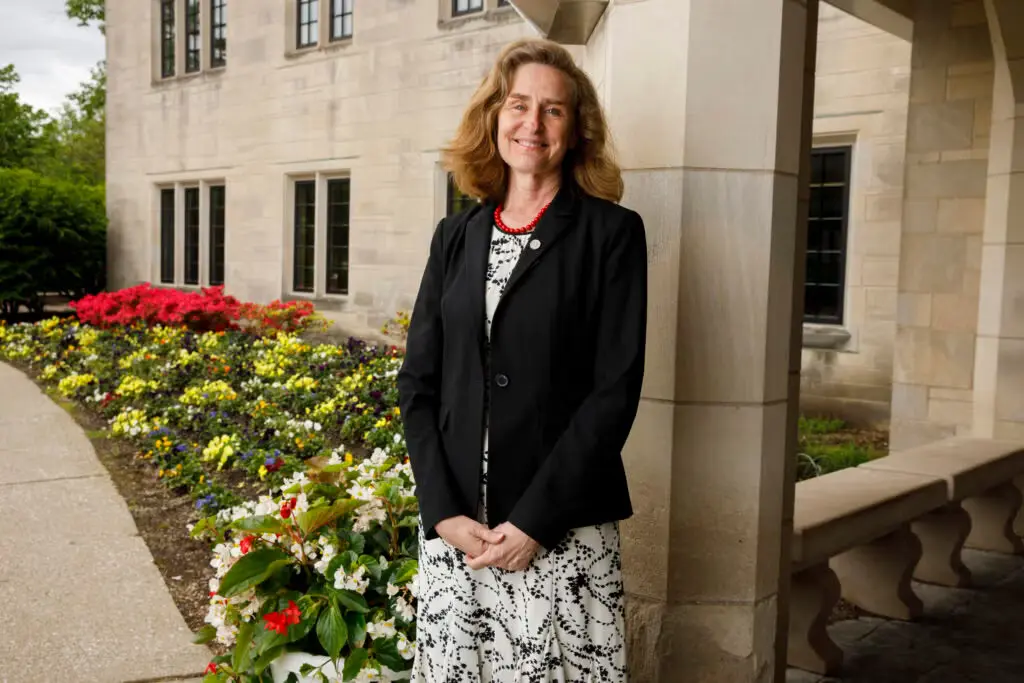
Pamela Whitten, a prominent figure in higher education, currently serves as the President of Indiana University. Her leadership and vision are reshaping the educational landscape, emphasizing innovation, inclusivity, and technological advancement. The relevance of her work is significant in today’s rapidly changing academic environment, where institutions must adapt to meet the evolving needs of students and society.
Key Initiatives and Achievements
Appointed as Indiana University’s first female president in 2021, Whitten brings over two decades of experience in academic administration and leadership. Preceding her position at Indiana, she held the role of Executive Vice President and Provost at the University of Georgia. Whitten’s initiatives at Indiana University focus on enhancing student success, fostering diversity, and expanding research opportunities.
One of Whitten’s cornerstone projects is the “Destination Indiana” initiative, aimed at making higher education more accessible and equitable. This program not only seeks to improve retention and graduation rates among underrepresented students but also pushes for stronger partnerships with local industries to ensure that graduates are equipped with the skills needed in the workforce. Under her leadership, the university has also committed to significant investments in digital technology to transform the learning experience, especially in response to the challenges posed by the COVID-19 pandemic.
Education and Background
Pamela Whitten earned her bachelor’s degree in Communication from the University of Georgia, followed by a master’s degree and Ph.D. in Speech Communication from the University of Illinois at Urbana-Champaign. Her academic background laid the foundation for her research interests, which focus on health communication and the impact of technology on learning.
Conclusion
As the educational sector faces unprecedented challenges and transformations, the leadership of figures like Pamela Whitten is crucial. Her commitment to innovation and inclusivity not only enhances the educational experience but also prepares students for a changing world. As universities continue to adapt to new realities, Whitten’s initiatives may serve as a model for other institutions seeking to create a more equitable and effective learning environment. Her impact in the higher education arena will likely resonate for many years to come, influencing policy and practice well beyond Indiana University.