Before the recent developments, the expectation was that Japan would maintain a pacifist stance in international conflicts, particularly in relation to the ongoing tensions in the Middle East. Japan’s Self-Defense Forces operate under a constitution that renounces war, and Prime Minister Sanae Takaichi had previously indicated that there were no plans to dispatch naval vessels to the region.
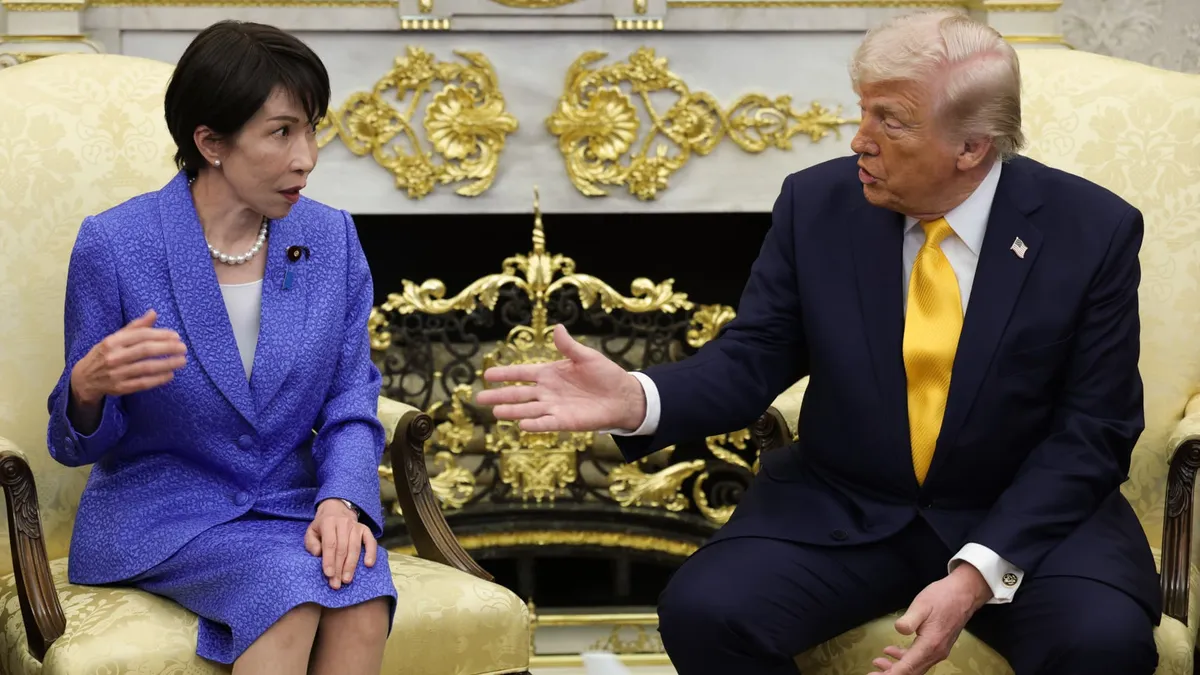
However, during a meeting in Washington, DC, on March 19, 2026, Donald Trump drew a striking comparison to the surprise attack on Pearl Harbor in 1941, which resulted in over 2,400 deaths. Trump remarked, “Who knows better about that. Why didn’t you tell me about Pearl Harbor? You believe in surprise much more so than I.” This statement was made in the context of discussing the U.S. military’s recent actions against Iran, where Trump noted that the U.S. did not inform its allies to maintain the element of surprise.
The immediate effect of this reference was a renewed focus on Japan’s historical experiences with surprise attacks, particularly as tensions escalate in the Middle East. Trump’s comments came as the U.S. reported that approximately 50% of Iranian military capabilities were knocked out in the first two days of its attack.
In response to Trump’s remarks, Takaichi reiterated Japan’s commitment to its pacifist constitution, emphasizing that Japan would not engage in military actions related to the Iran conflict. This stance reflects a broader reluctance among European allies, as both Germany and France have stated they would not participate in military actions concerning Iran.
Experts suggest that Trump’s invocation of Pearl Harbor serves as a reminder of the complexities involved in international military strategies and alliances. The historical context of Pearl Harbor, which led to the U.S. entering World War II, underscores the potential consequences of surprise attacks and the importance of communication among allies.
As tensions continue to rise, the implications of these discussions may influence future military strategies and diplomatic relations in the region. The contrasting positions of the U.S. and Japan highlight the delicate balance between maintaining national security and adhering to international agreements.
While Trump praised Japan for its assistance in securing the Strait of Hormuz, the ongoing conflict raises questions about the role of traditional allies in modern warfare. The situation remains fluid, and details remain unconfirmed regarding any potential shifts in Japan’s military posture.
Overall, the reference to Pearl Harbor not only evokes historical lessons but also reflects the ongoing challenges faced by nations in navigating complex geopolitical landscapes.