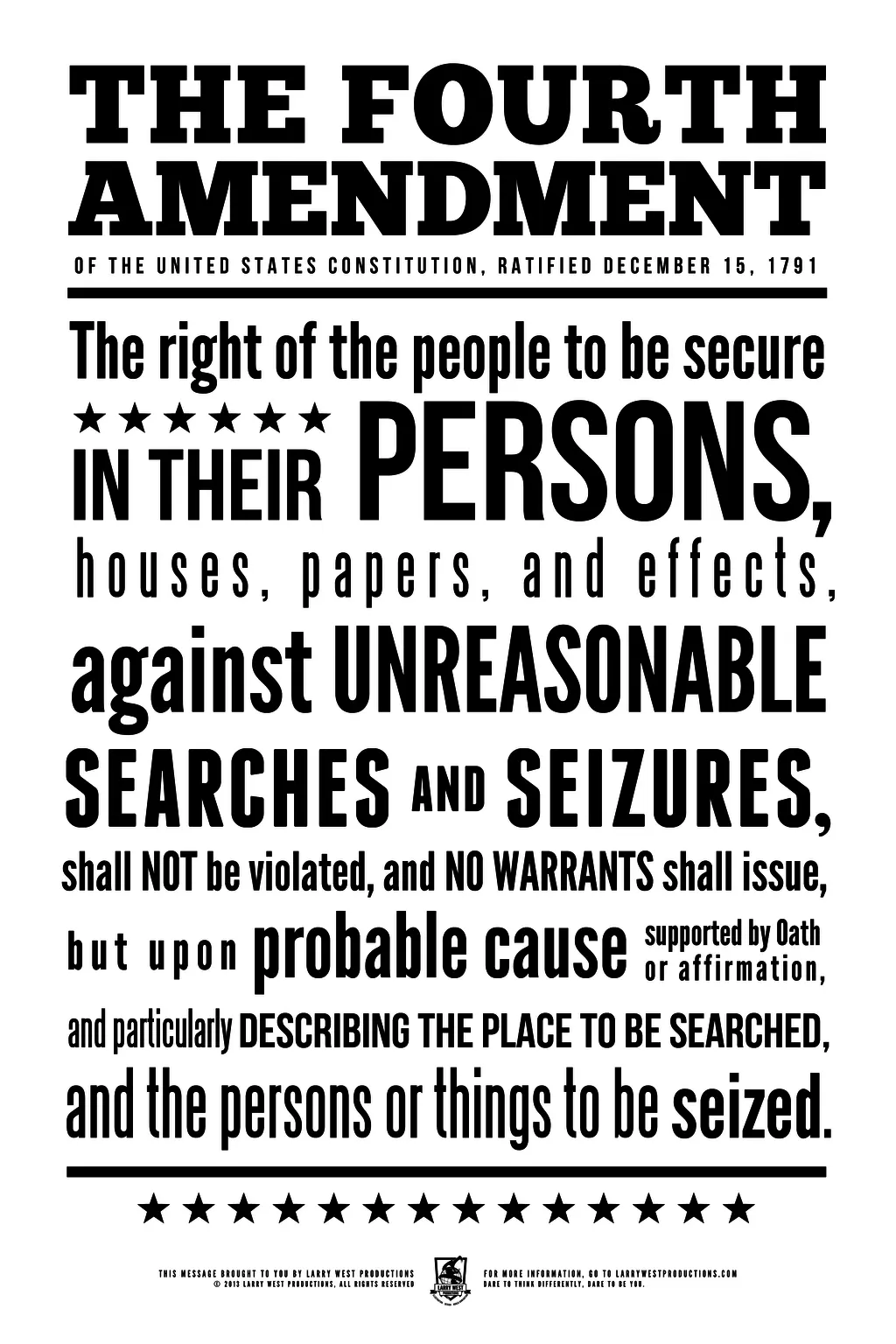
Introduction to the 4th Amendment
The 4th Amendment of the United States Constitution plays a critical role in safeguarding citizens’ rights against unreasonable searches and seizures. Established as part of the Bill of Rights in 1791, this amendment protects individuals’ privacy, ensuring that law enforcement agencies must have probable cause and a warrant to conduct searches in personal spaces. In a rapidly evolving digital age, the relevance of this amendment is more pertinent than ever, especially as debates over privacy and government surveillance continue to intensify.
Current Context and Legal Challenges
In recent years, the 4th Amendment has faced numerous legal challenges, particularly related to technological advancements. For example, the Supreme Court’s ruling in Carpenter v. United States (2018) determined that law enforcement must obtain a warrant to access cell phone location data, acknowledging that digital privacy rights extend to modern technology. Moreover, ongoing discussions about surveillance programs and data collection have raised questions about how the 4th Amendment applies in today’s society.
Public concern surrounding government overreach in surveillance practices has led to increased scrutiny of practices such as facial recognition technology and the collection of metadata. Several states have begun proposing legislation aimed at reinforcing privacy protections that align with the principles of the 4th Amendment.
Recent Developments
The legal landscape surrounding the 4th Amendment remains dynamic, with numerous cases pending that could further define its scope. For example, in Friedman v. Maryland, the court is set to rule on whether police officers must obtain a warrant before accessing an individual’s online activity records. Such rulings could set significant precedents for future interpretations of privacy rights.
Conclusion: The 4th Amendment’s Significance
As America grapples with the balance between public safety and individual rights, the 4th Amendment stands as a cornerstone of legal protections against unwarranted government intrusion. The implications of both past and future rulings from the judiciary will play a crucial role in defining the extent of these rights in a digital world. As citizens become more aware and concerned about their privacy, the relevance of the 4th Amendment will continue to grow, reminding us of the fundamental rights guaranteed by the Constitution amidst evolving societal norms.