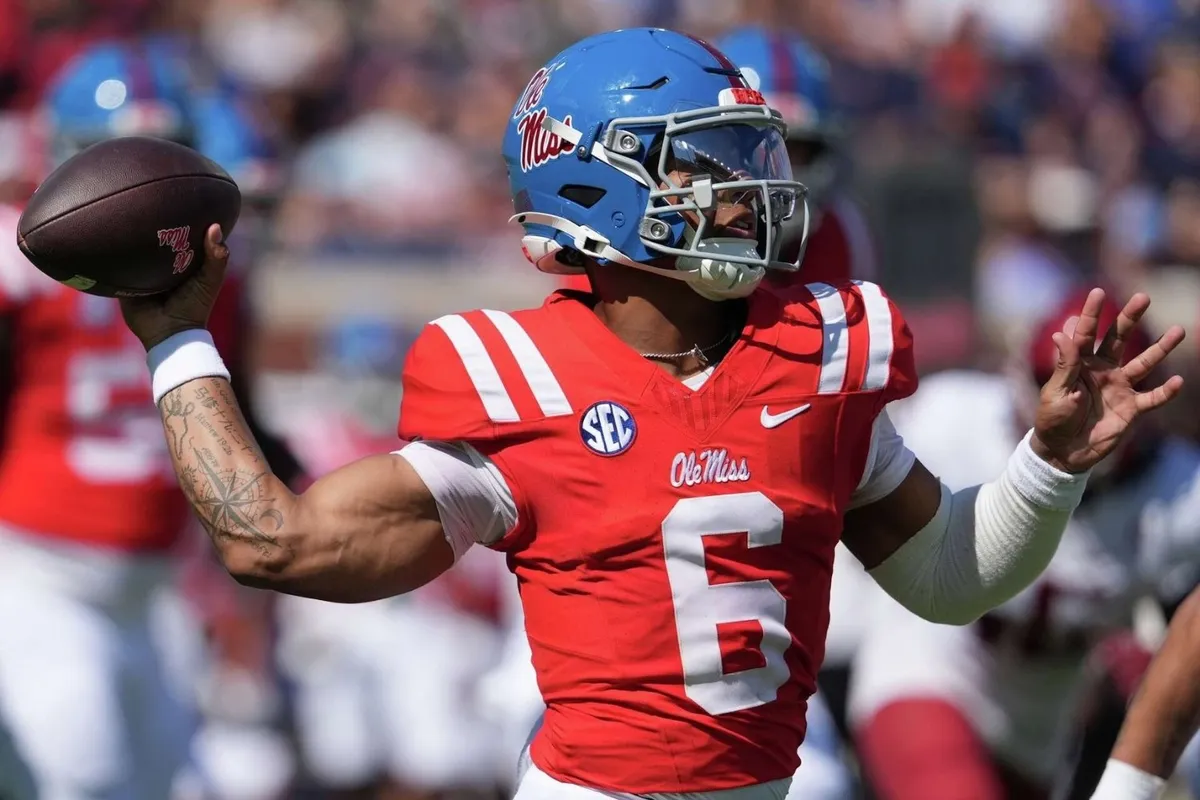
Trinidad Chambliss has received a significant legal victory that allows him to play for Ole Miss in the 2026 college football season. This decision comes after the Mississippi Supreme Court denied the NCAA’s petition to appeal a preliminary injunction that was previously granted to Chambliss. The ruling underscores the ongoing legal battles surrounding athlete eligibility and the complexities of NCAA regulations.
Chambliss, who transferred to Ole Miss from Ferris State before the 2025 season, has had a tumultuous college career marked by health issues that hindered his development. After experiencing recurrent throat infections and other health complications, he applied for a retroactive medical redshirt, which would grant him an additional year of eligibility. Judge Robert Whitwell ruled in favor of Chambliss, allowing him to continue his college career despite the NCAA’s initial denial of his waiver request on January 9, 2026.
In the 2025 season, Chambliss led Ole Miss to two College Football Playoff wins, showcasing his skills as a quarterback. He finished the season with impressive statistics, throwing for 3,937 yards, 22 touchdown passes, and only three interceptions. Additionally, he rushed for 527 yards and scored eight rushing touchdowns, earning him the title of SEC newcomer of the year.
The Mississippi Supreme Court’s decision to deny the NCAA’s appeal on March 27, 2026, solidifies Chambliss’s position as he prepares for the upcoming season. The court stated, “We find that the petition should be denied,” affirming the lower court’s ruling that allows Chambliss to play. The preliminary injunction from Judge Whitwell will remain in effect, giving Chambliss the opportunity to compete at the collegiate level.
Chambliss’s case is particularly noteworthy as it highlights the challenges faced by student-athletes dealing with health issues. He has been in college for five seasons, with injuries impacting two of those seasons. His situation is further complicated by the NCAA’s stringent eligibility rules, which often leave athletes in precarious positions regarding their future in sports.
As the 2026 season approaches, uncertainties remain regarding the overall lawsuit ruling concerning Chambliss’s eligibility. It is unclear whether the NCAA will file a motion for another hearing regarding his case. Details remain unconfirmed, and the outcome of any further legal challenges could significantly impact Chambliss’s future in college football.
Chambliss’s journey reflects the broader issues within college athletics, where the intersection of health, eligibility, and institutional regulations can create significant hurdles for athletes. His perseverance through these challenges has not only allowed him to continue playing but has also drawn attention to the need for reform in how eligibility is determined for student-athletes.