Introduction to Martial Law
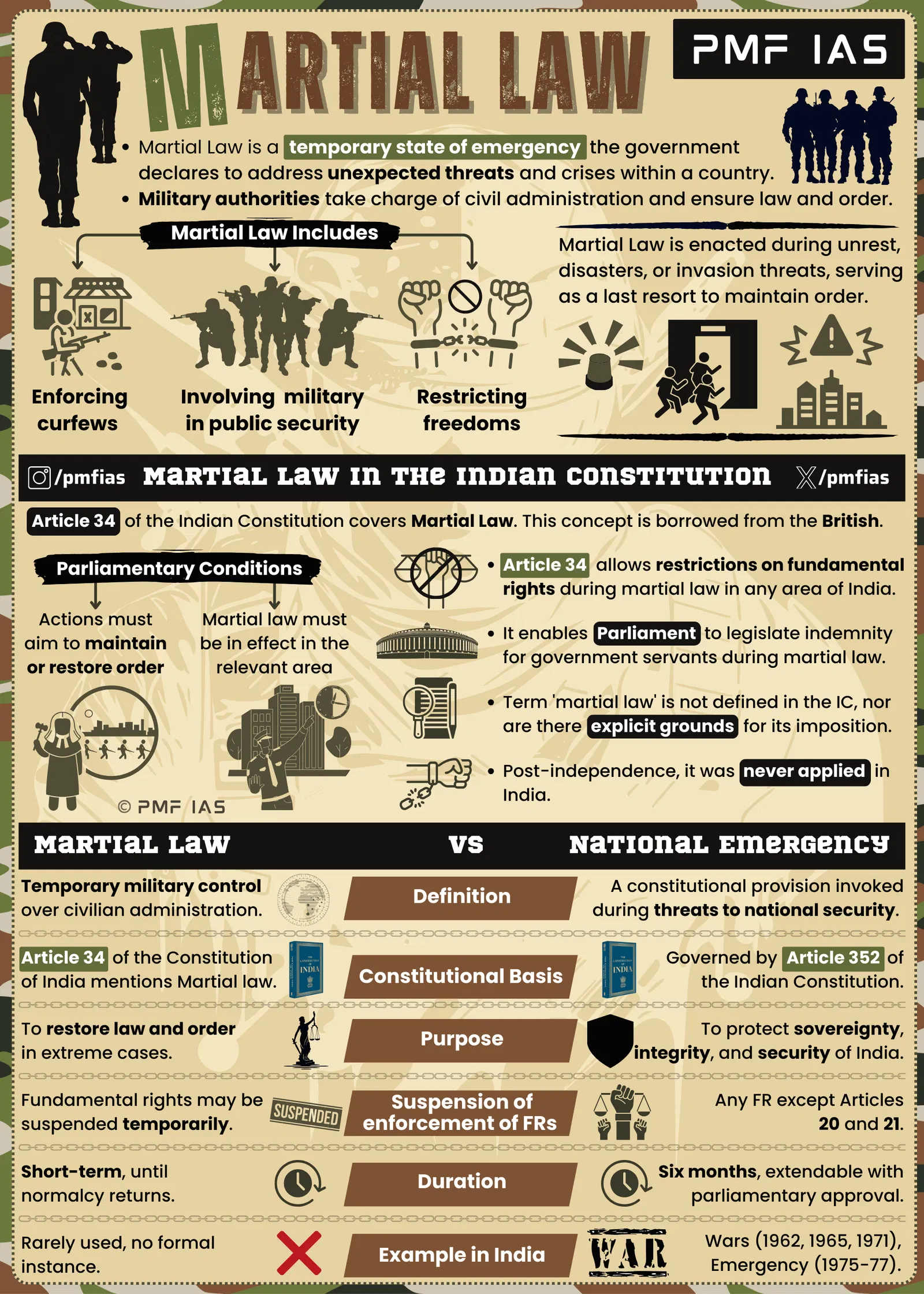
Martial law is a state of emergency declared by military authorities in times of unrest, natural disaster, or major crisis. It enables the military to assume control over normal civil functions and enforce order, often leading to stringent limitations on civil liberties. As political tensions and unrest become increasingly prevalent worldwide, understanding martial law and its implications has never been more crucial.
Recent Implementation of Martial Law
In recent months, various nations have faced protests and civil disturbances that have prompted discussions around martial law. For instance, in October 2023, the government of Country X declared martial law amidst escalating protests against perceived governmental overreach and economic instability. The declaration allowed military forces to patrol the streets and enforce curfews in an effort to restore order and prevent violence.
The decision to impose martial law in Country X has sparked a heated debate regarding civil rights and democratic governance. Critics argue that while the government claims it is protecting its citizens, there is a risk that such measures may lead to authoritarian practices and the erosion of democratic freedoms. Supporters contend that it is a necessary step to ensure public safety during turbulent times.
The Legal Framework of Martial Law
The legal framework governing martial law varies from country to country. In the United States, martial law has been used sparingly throughout history, often following natural disasters and during wartime. The Posse Comitatus Act restricts the use of the military for civilian law enforcement, emphasizing the importance of maintaining civil control. However, in extraordinary circumstances, such as the aftermath of Hurricane Katrina in 2005, military intervention became a critical response to restore order.
Conclusion: The Significance of Martial Law in Today’s Context
The rising instances of martial law highlight a growing trend of using military power in domestic affairs, underlining its significance in contemporary governance. For citizens, it raises important questions about the balance between security and civil liberties. As we move forward, it is vital for the public to remain informed and engaged in discussions surrounding the implications of martial law. Understanding its scope and limitations is crucial for preserving the integrity of democratic institutions and protecting individual rights in times of crisis.