Introduction
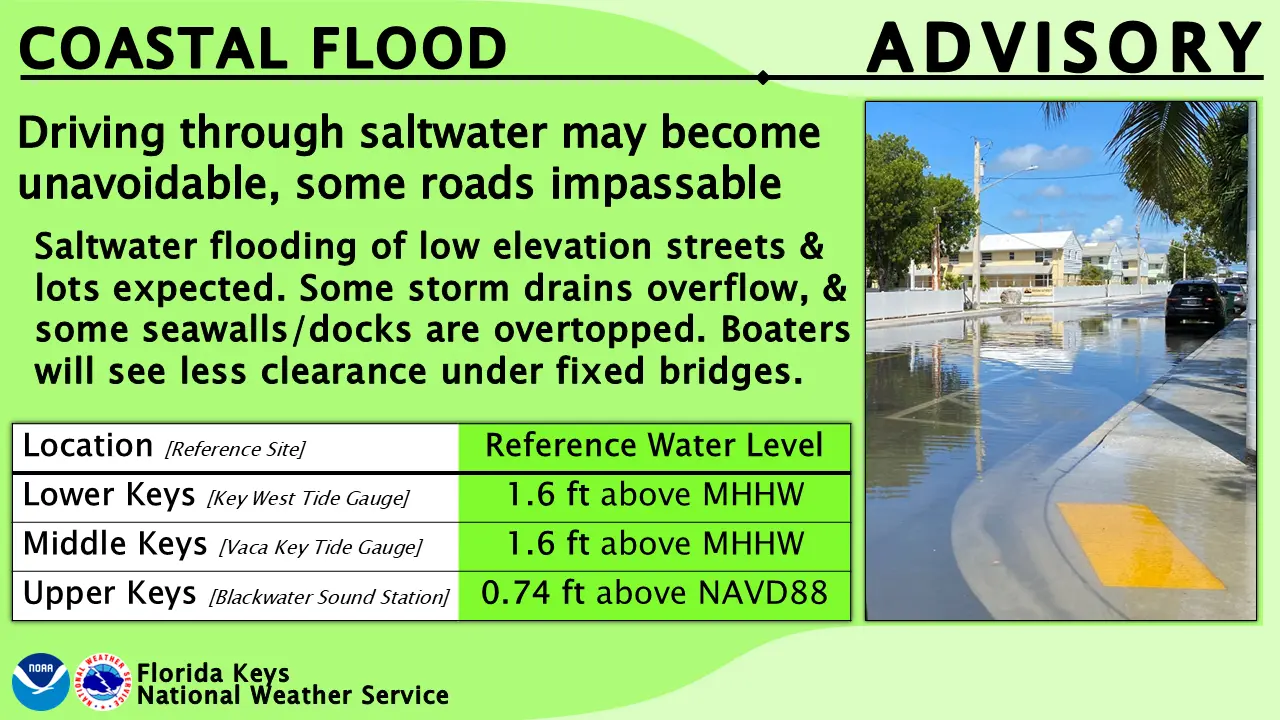
Coastal flood advisories are critical alerts issued by meteorological agencies to warn communities about the dangers of flooding due to high tides, storm surges, or heavy rainfall. As climate change continues to impact weather patterns and sea levels, the relevance of these advisories has become more pronounced. In October 2023, multiple regions along the East Coast, particularly around New Jersey and Florida, are currently under coastal flood advisories, emphasizing the need for awareness and preparedness among residents.
Current Events and Details
The National Weather Service (NWS) has issued coastal flood advisories for various coastal counties, affecting thousands of residents. These advisories are put into place when there is potential flooding due to conditions such as astronomical high tides combined with strong winds. In New Jersey, towns along the coastline are bracing for elevated water levels which are expected to peak in the coming days. Local authorities have warned that flooding could impact low-lying areas, streets, and properties, potentially leading to road closures and emergency evacuations.
Similarly, in Florida, heavy rainfall combined with strong onshore winds has led to warnings of possible coastal flooding, particularly in Miami-Dade and Broward counties. Residents are advised to secure their property, avoid low-lying areas prone to flooding, and stay tuned for updates from local emergency services. Reports from early October indicated rising tides coupled with significant rainfall already caused inconveniences in some communities, leading to swift actions by local governments.
Conclusion
Coastal flood advisories serve as essential tools in safeguarding lives and properties, especially in vulnerable coastal regions. As weather events become increasingly unpredictable due to climate trends, the importance of staying informed through advisories becomes paramount. For residents living in coastal areas, preparedness is key; this includes knowing evacuation routes and having emergency kits ready. With weather patterns projected to evolve, it is crucial for communities to enhance their resilience against flooding, ensuring safety and stability in the face of future weather incidents.