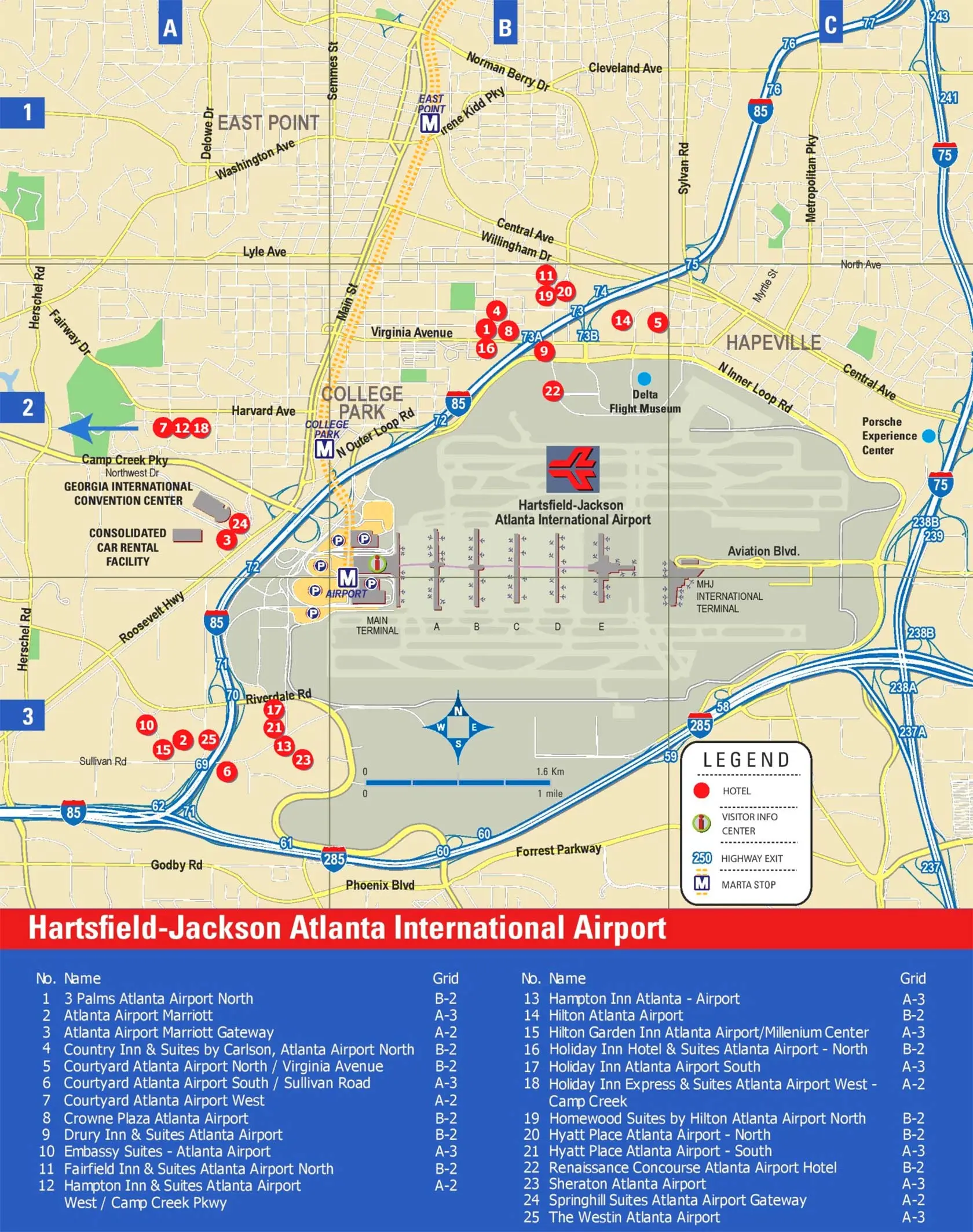
Introduction
Hartsfield-Jackson Atlanta International Airport (ATL) is not only one of the busiest airports in the world, but it also serves as a critical transportation hub connecting millions of passengers each year. Its strategic location and comprehensive network of domestic and international flights make it an essential part of the global travel infrastructure. With ongoing developments, ATL is constantly evolving to meet both increasing passenger demand and changing industry standards.
Significance of Atlanta Airport
According to the Federal Aviation Administration, ATL has consistently ranked as the world’s busiest airport based on passenger numbers since 1998. In 2022 alone, the airport processed over 93 million travelers. This immense volume underscores its importance as a key player in the aviation industry. Numerous major airlines, including Delta Air Lines, which has its main hub at ATL, facilitate connections to more than 150 domestic and 75 international destinations.
Recent Developments
In recent years, Atlanta Airport has undergone significant renovations and expansions aimed at enhancing passenger experience. Notably, the airport is in the midst of a multi-billion dollar modernization program that includes improvements to concourses, upgrades to technology, and expansions of facilities. These initiatives aim to reduce wait times and improve overall efficiency, which are critical factors given the airport’s heavy traffic. Furthermore, in an effort to remain competitive, ATL has introduced new amenities such as upgraded shopping and dining options that reflect the local culture.
The Future of Atlanta Airport
As travel demand continues to rise post-pandemic, ATL is anticipated to see even greater passenger numbers in the coming years. Analysts project that by 2025, the airport could exceed 100 million passengers annually. This forecast has led city officials to prioritize continuing infrastructure upgrades, sustainability initiatives, and improved passenger services to accommodate future growth. Additionally, ATL aims to enhance its role in cargo transport as e-commerce flourishes, which could provide new revenue streams for the airport.
Conclusion
Atlanta Airport is more than just an entry point to the United States; it is a vital hub that significantly influences global connectivity. As it navigates through modernization and expansion, it remains essential for local and international economies. For travelers, the ongoing advancements promise a more efficient and pleasant flying experience, solidifying ATL’s place as a key player in air travel for years to come.