Who is involved
The Ambassador Bridge has long been recognized as the primary route for commercial vehicle crossings between Canada and the United States. Historically, it was the leading crossing between Michigan and Ontario, with a significant number of commercial and passenger vehicle crossings. However, recent developments have led to a notable shift in this status quo.
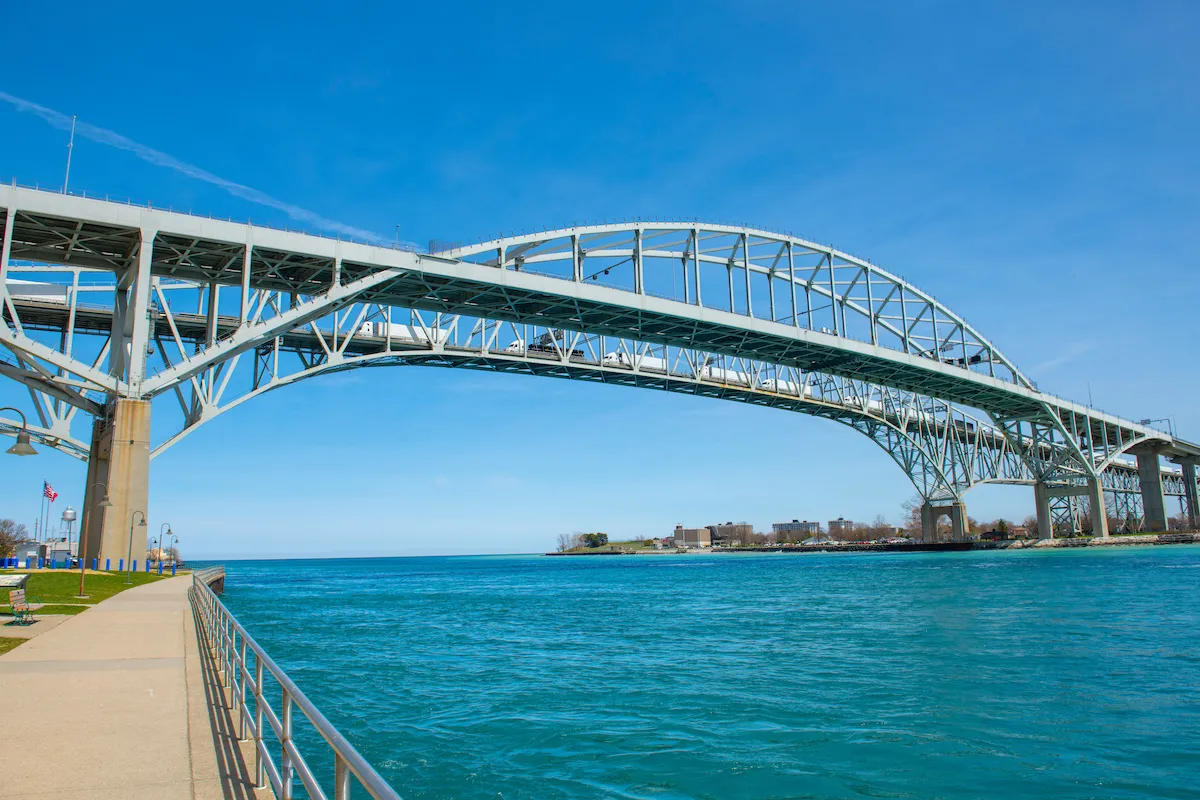
As of 2025, the Blue Water Bridge has overtaken the Ambassador Bridge in terms of commercial vehicle crossings, recording over 2.1 million crossings compared to the 1.9 million at the Ambassador Bridge. This change marks a decisive moment in cross-border transportation, reflecting evolving patterns in trade and transportation logistics.
In the first quarter of 2026, the trend continued, with the Blue Water Bridge facilitating 531,732 commercial truck trips, while the Ambassador Bridge recorded 496,796 trips. This shift indicates a growing preference among truck operators for the Blue Water Bridge, likely influenced by its significantly lower tolls, which are $7 per axle compared to the $27 per axle at the Ambassador Bridge.
Experts suggest that the high tolls at the Ambassador Bridge have driven record commercial traffic through the Blue Water Bridge. Stephen Laskowski from the Canadian Trucking Alliance noted, “Price sensitivity entered in the market for the supply chain,” highlighting how cost factors are reshaping transportation choices. Furthermore, Alexandre Gauthier remarked, “The Blue Water Bridge has surpassed all other international crossings in commercial traffic volume,” underscoring the competitive landscape that has emerged.
While the Ambassador Bridge still maintains a lead in passenger vehicle crossings, with 3.5 million compared to 1.6 million at the Blue Water Bridge, the commercial traffic dynamics are shifting. The Gordie Howe International Bridge, which is expected to further impact traffic patterns, has faced delays and is currently about $700 million over its initial budget of $5.4 billion. Its opening date remains uncertain, adding to the unpredictability of the border crossing landscape.
The implications of these changes extend beyond just traffic numbers; they reflect broader trends in trade and transportation efficiency. As Matti Siemiatycki pointed out, “No one takes on risk for free,” indicating that the financial burdens of tolls are influencing decisions made by trucking companies.
Details remain unconfirmed regarding the future of the Ambassador Bridge and the anticipated impact of the Gordie Howe International Bridge. However, the current data illustrates a significant shift in cross-border traffic dynamics, with the Blue Water Bridge emerging as a formidable competitor in the transportation sector.