Recent Developments in Aurora Borealis Predictions
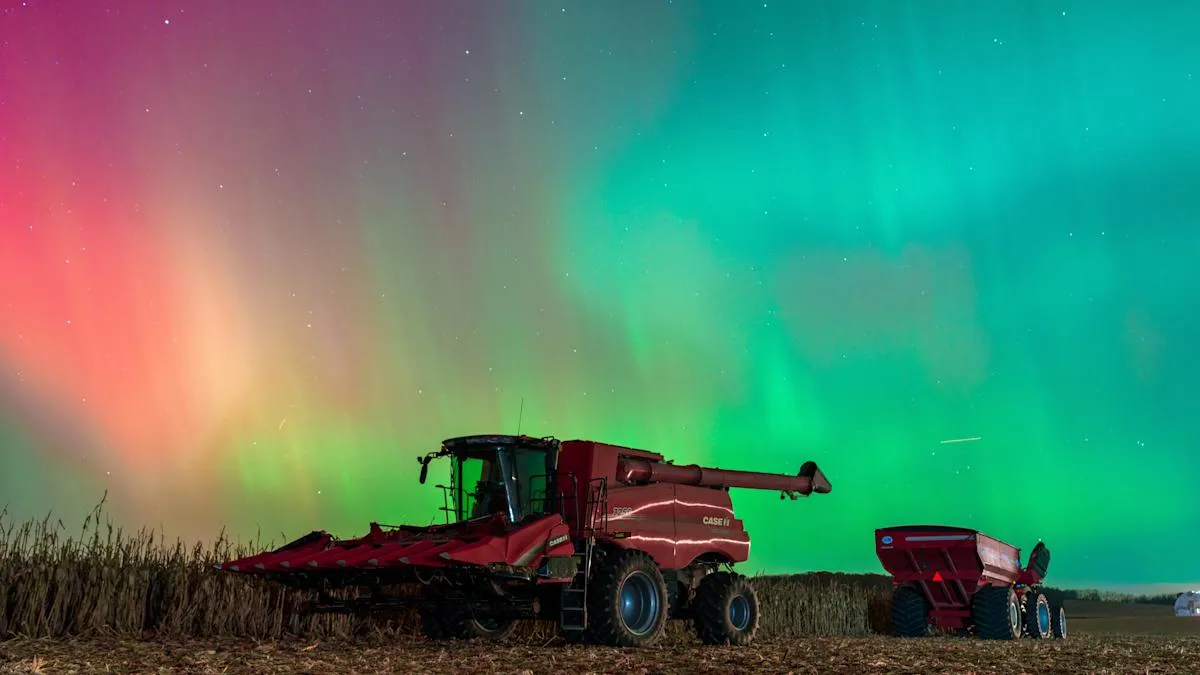
Historically, the aurora borealis, or northern lights, has captivated observers, particularly in regions closer to the poles. Traditionally, March has been recognized as the prime month for viewing these stunning natural displays, according to a 75-year data set studied by retired NASA solar physicist David Hathaway. This past expectation has set a benchmark for aurora visibility, with many enthusiasts planning their sightings around this time of year.
However, a significant shift has occurred with the NOAA’s recent announcement of a geomagnetic storm watch for December 9, 2025. This watch predicts a strong G3 geomagnetic storm, which is expected to bring auroras visible from late Monday night into the early hours of Tuesday morning, and potentially again on Tuesday night. This change marks a notable deviation from the typical seasonal patterns, suggesting that auroras could be seen much farther south than usual.
Immediate Effects of the Geomagnetic Storm
The impending geomagnetic storm is a direct result of a ‘full-halo’ coronal mass ejection generated by a strong solar flare on December 6. As a result, states including Alaska, Washington, Oregon, Idaho, Montana, Wyoming, North Dakota, South Dakota, Nebraska, Minnesota, Iowa, Wisconsin, Illinois, Michigan, Indiana, Ohio, Pennsylvania, New York, Massachusetts, Vermont, New Hampshire, and Maine may all have opportunities to witness this celestial phenomenon. This broad visibility across the northern U.S. is a significant development, as it expands the typical viewing range.
Experts like Caitlin Kaiser from the NOAA have noted that parts of the Great Lakes, Midwest, and Northeast will have the best chance of seeing the northern lights during this event. However, she cautions that many areas may contend with thick cloud cover, which could obstruct views. Additionally, she advises those venturing out to see the auroras to bundle up, as temperatures are expected to drop well below freezing.
Understanding the Science Behind the Aurora Borealis
The auroras are caused by fast-moving solar wind impacting the Earth’s magnetic field. This interaction creates the beautiful light displays that can be seen in the night sky. The upcoming geomagnetic storm, classified as a G3 level, indicates a significant disturbance in the Earth’s magnetosphere, which is likely to enhance the visibility of the auroras.
While March is typically the month with the most geomagnetically active days, this December event illustrates that auroras are not limited to a specific season. The southern counterpart of the aurora borealis, known as the aurora australis, also experiences similar phenomena, indicating that these natural displays can occur under various solar conditions throughout the year.
Looking Ahead
As the December 9 event approaches, anticipation builds among aurora enthusiasts and casual observers alike. The next vernal equinox is set to occur on March 20, 2026, which may also bring additional opportunities for aurora viewing. Meanwhile, NOAA has already issued a geomagnetic storm watch for March 6, 2026, predicting visible auroras farther south than usual once again.
In summary, the NOAA’s geomagnetic storm watch for the aurora borealis on December 9, 2025, represents a significant shift in expectations for aurora visibility in the northern U.S. This event not only highlights the dynamic nature of space weather but also serves as a reminder of the beauty and unpredictability of our natural world. Details remain unconfirmed.