Reaction from the field
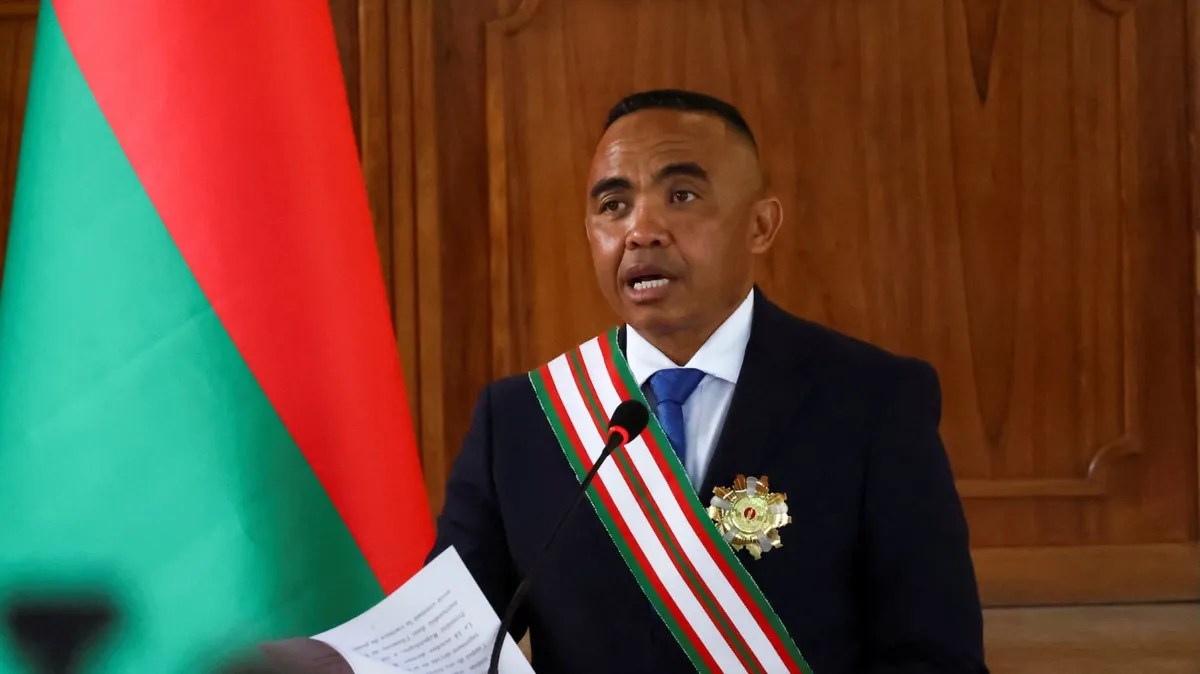
The recent coup in Madagascar, which saw Colonel Michael Randrianirina seize power from President Andry Rajoelina on October 12, 2025, has raised significant concerns about political stability in the region. The African Union (AU) responded by suspending Madagascar, citing an unconstitutional change of government. This action highlights the ongoing challenges faced by nations grappling with the legacy of military rule and the quest for democratic governance.
In contrast, the Southern African Development Community (SADC) chose not to suspend Madagascar, as power was transferred to Randrianirina by the High Constitutional Court. This decision underscores the complexities of regional politics and the varying interpretations of legitimacy in governance. Randrianirina has promised to restore a democratic civilian government within 18 to 24 months, but skepticism remains regarding the feasibility of this timeline.
On March 25, 2026, thousands marched in Buenos Aires, Argentina, to commemorate the 50th anniversary of the country’s last military coup. This event serves as a poignant reminder of the dark period in Argentine history known as the ‘Dirty War,’ during which an estimated 30,000 people were disappeared. The march coincided with a national holiday dedicated to honoring the victims of this brutal dictatorship, reflecting the enduring impact of past atrocities on contemporary society.
Justice Elena Kagan recently posed a hypothetical question during a U.S. Supreme Court oral argument regarding presidential immunity in the context of military coups. She asked, “He’s gone. Let’s say this president who ordered the military to stage a coup. He’s no longer president, he wasn’t impeached, he couldn’t be impeached, but he ordered the military to stage a coup. You’re saying that’s an official act. That’s immune?” This inquiry underscores the legal and moral complexities surrounding the actions of leaders who engage in such drastic measures.
The dialogue process to restore civilian rule in Madagascar is expected to be inclusive, as emphasized by various stakeholders. However, the path forward remains fraught with uncertainty, particularly given the historical context of military interventions in governance across the continent. The term ‘coupvolution’ has been used to describe Madagascar’s 2025 transfer of power, indicating a blend of popular revolution and military coup.
As Madagascar navigates this transitional period, the international community will be closely monitoring developments. The AU’s suspension and the SADC’s decision not to intervene reflect differing approaches to governance and stability in the region. The outcomes of these political maneuvers will have lasting implications for Madagascar’s future and its relationship with neighboring countries.
In Argentina, the commemoration of the military coup serves as a reminder of the importance of historical memory in shaping current political discourse. The collective memory of the victims of the ‘Dirty War’ continues to influence Argentine society, as citizens advocate for justice and accountability. The juxtaposition of Argentina’s historical struggles with Madagascar’s current political upheaval highlights the universal challenges faced by nations in their pursuit of democracy and human rights.
Details remain unconfirmed regarding the specific actions that will be taken by Randrianirina’s government in Madagascar. As the situation evolves, the international community will be watching closely to see if promises of democratic restoration are fulfilled and how the legacy of past coups continues to shape the political landscape in both Madagascar and Argentina.