Key moments
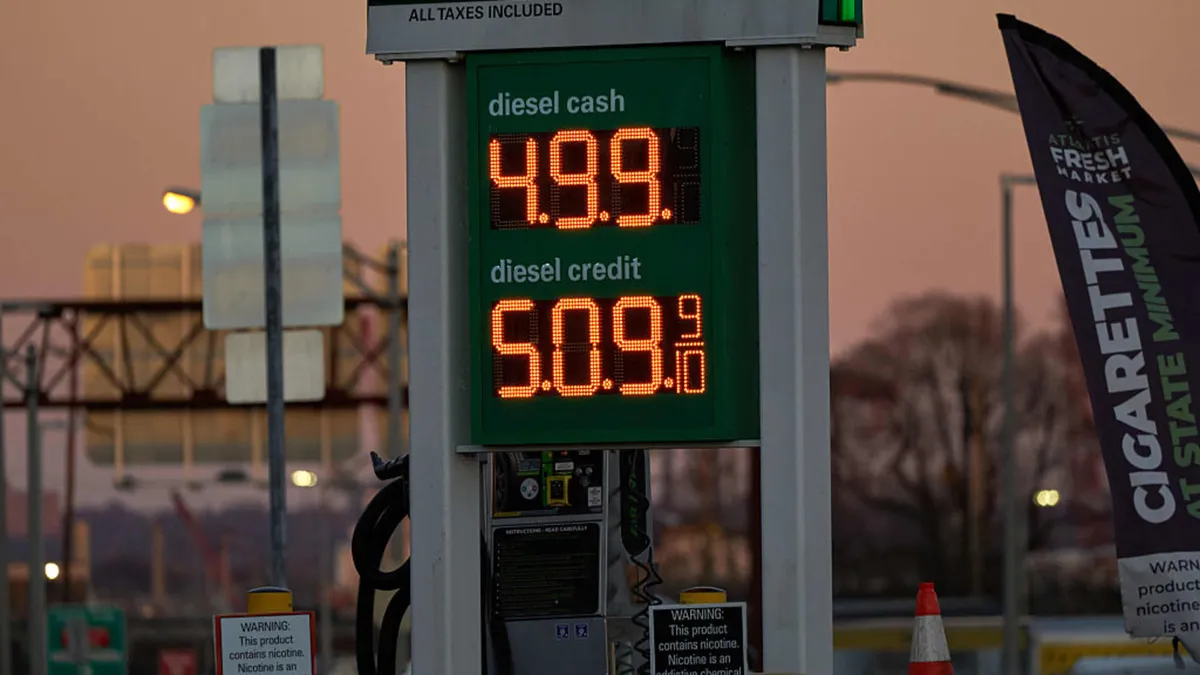
On March 17, 2026, U.S. diesel fuel prices surged to an average of $5.04 per gallon, marking the first time prices have exceeded $5 in over three years. This sharp increase of 34% from the previous day is attributed to escalating tensions and conflicts in Iran, which have significantly impacted global oil supplies.
The rise in diesel prices is particularly concerning, as it reflects the highest levels since December 2022, when prices also spiked due to the Russia-Ukraine conflict. Currently, oil prices have jumped more than 40% since the onset of the Iran war, which has disrupted the flow of oil through critical routes, including the Strait of Hormuz, where approximately 20% of global oil supplies typically pass.
Farmers and logistics companies are feeling the financial strain from rising diesel costs. The average cost of diesel was around $3.65 just a month ago, and the current prices are causing significant concerns for agricultural operations that rely heavily on diesel fuel for machinery. Paul Dietrich, an industry expert, emphasized that “diesel is what moves the real economy. It hauls the food, the packages, the building supplies and the inventory sitting on store shelves.” He further noted that higher fuel costs act like a tax, impacting various sectors.
In a related development, authorities in Northwest Florida recently made several arrests linked to a diesel fuel theft scheme. The defendants reportedly used magnets to manipulate fuel pump components, allowing them to steal diesel fuel. This scheme has resulted in substantial financial losses for fuel stations in the area, prompting Florida to toughen its laws against such thefts. Captain Brad Brady commented on the sophistication of the theft, stating, “They know right where to stick that magnet that’ll mechanically open a component to allow fuel to pump.” The bond amount for one of the defendants, Sergio Machin, was set at $11,000.
As diesel prices continue to rise, the impact on container shipping fees remains unclear. Industry experts are monitoring how quickly non-oil maritime freight traffic will return to normal amid these fluctuations. Andy Lipow, an oil market analyst, expressed concern, stating, “One should really be worried about higher diesel prices.”
Overall, the surge in diesel fuel prices is a reflection of broader geopolitical tensions and their direct impact on the U.S. economy. With the ongoing conflict in Iran, the situation remains fluid, and details remain unconfirmed regarding the long-term implications for fuel prices and supply chains.