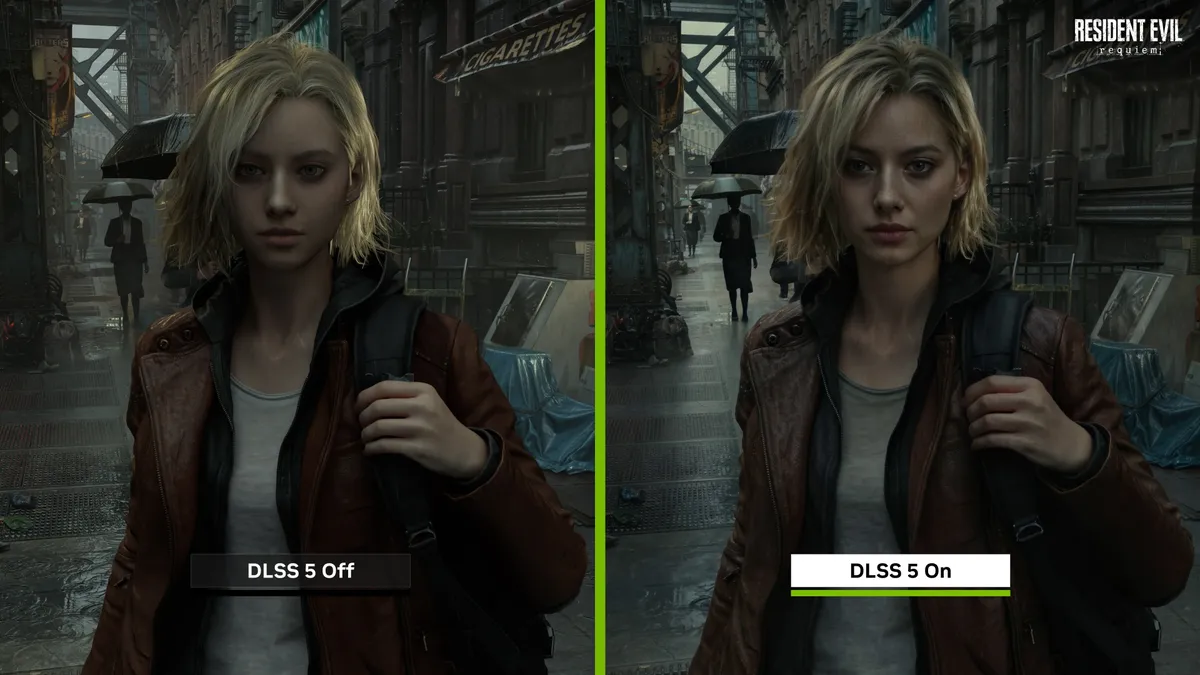
Before the announcement of DLSS 5, gamers and developers anticipated incremental improvements in graphics technology. The previous iteration, DLSS 4.5, had already made strides in enhancing visual fidelity, but expectations were tempered by the limitations of traditional rendering techniques.
The decisive moment came with NVIDIA’s unveiling of DLSS 5, which introduces a real-time neural rendering model that infuses pixels with photoreal lighting and materials. This leap is described as the most significant breakthrough in computer graphics since the introduction of real-time ray tracing in 2018.
DLSS 5 is set to run in real time at up to 4K resolution, providing smooth and interactive gameplay. Major publishers and game developers, including Bethesda, CAPCOM, and Ubisoft, have committed to supporting this technology, indicating a broad industry acceptance that could reshape gaming experiences.
The integration of AI in DLSS 5 allows for the infusion of scenes with photoreal lighting and materials based on color and motion vectors. This capability is designed to work seamlessly with standard rasterized games, RT supported titles, and path-traced experiences, marking a significant evolution in how games are rendered.
Jensen Huang, NVIDIA’s CEO, remarked, “DLSS 5 is the GPT moment for graphics — blending handcrafted rendering with generative AI to deliver a dramatic leap in visual realism while preserving the control artists need for creative expression.” This perspective underscores the transformative potential of DLSS 5 in the gaming industry.
Industry experts have echoed this sentiment. Todd Howard from Bethesda noted, “With DLSS 5, the artistic style and detail shine through without being held back by the traditional limits of real-time rendering.” This highlights the technology’s ability to enhance creative expression in game design.
Moreover, Charlie Guillemot from Ubisoft stated, “Immersion is about making the world feel real. DLSS 5 is a real step towards that goal,” emphasizing the technology’s role in enhancing player engagement and immersion.
As the gaming landscape evolves, DLSS 5 is anticipated to be utilized in high-profile titles such as Resident Evil Requiem, Hogwarts Legacy, and Starfield, further solidifying its impact on the industry.
Details remain unconfirmed regarding the exact launch date, but DLSS 5 is expected to arrive in Fall 2026, promising to redefine the boundaries of visual fidelity in gaming.