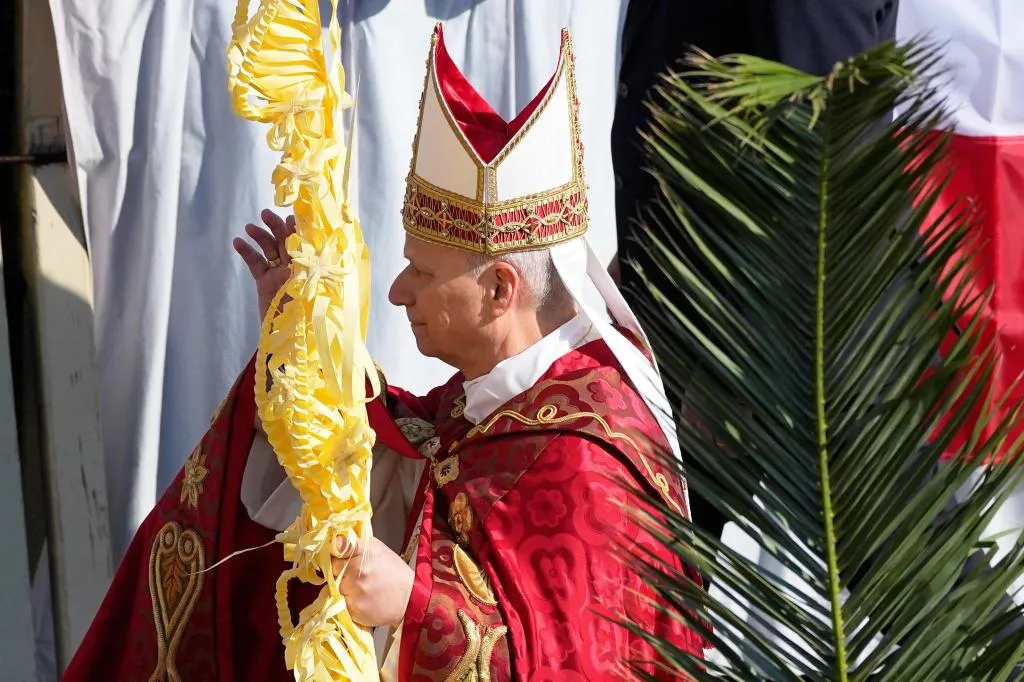
Palm Sunday 2026, held on March 29, witnessed a significant address by Pope Leon XIV in St. Peter’s Square, where he rejected claims that God justifies war. This statement comes at a time when the ongoing conflict between the United States and Israel against Iran has entered its second month, and the Russian invasion of Ukraine continues to unfold.
During the mass, attended by tens of thousands, Pope Leon XIV specifically prayed for Christians in the Middle East, highlighting their struggles amidst the turmoil. He declared, “Brothers and sisters, this is our God: Jesus, king of peace, who rejects war, whom no one can use to justify war.” This message resonated deeply with the congregation, emphasizing the need for reconciliation and peace.
In a notable development, the Israeli police prevented Catholic Church leaders from entering the Church of the Holy Sepulchre, marking the first time in centuries that ecclesiastical leaders were barred from celebrating Palm Sunday at this significant site. The police stated that freedom of worship would continue to be respected, albeit “subject to necessary restrictions.” This incident underscores the ongoing tensions in the region.
Pope Leon XIV, who succeeded Pope Francis after his passing on Easter Monday the previous year, has plans to preside over the Good Friday procession at the Colosseum and will celebrate Easter mass in St. Peter’s Square. He also intends to restore the tradition of the washing of the feet at the Basilica of St. John Lateran.
The mass on Palm Sunday serves as a poignant reminder of the triumphal entry of Jesus into Jerusalem before his crucifixion, a moment commemorated by Christians worldwide. As the Pope’s messages of peace echo in the hearts of many, the situation in the Middle East and the ongoing conflicts remain a pressing concern.
As the world watches, the implications of Pope Leon XIV’s statements and the events surrounding Palm Sunday 2026 may influence future dialogues on peace and reconciliation in conflict zones. Details remain unconfirmed regarding how these developments will affect the broader geopolitical landscape.