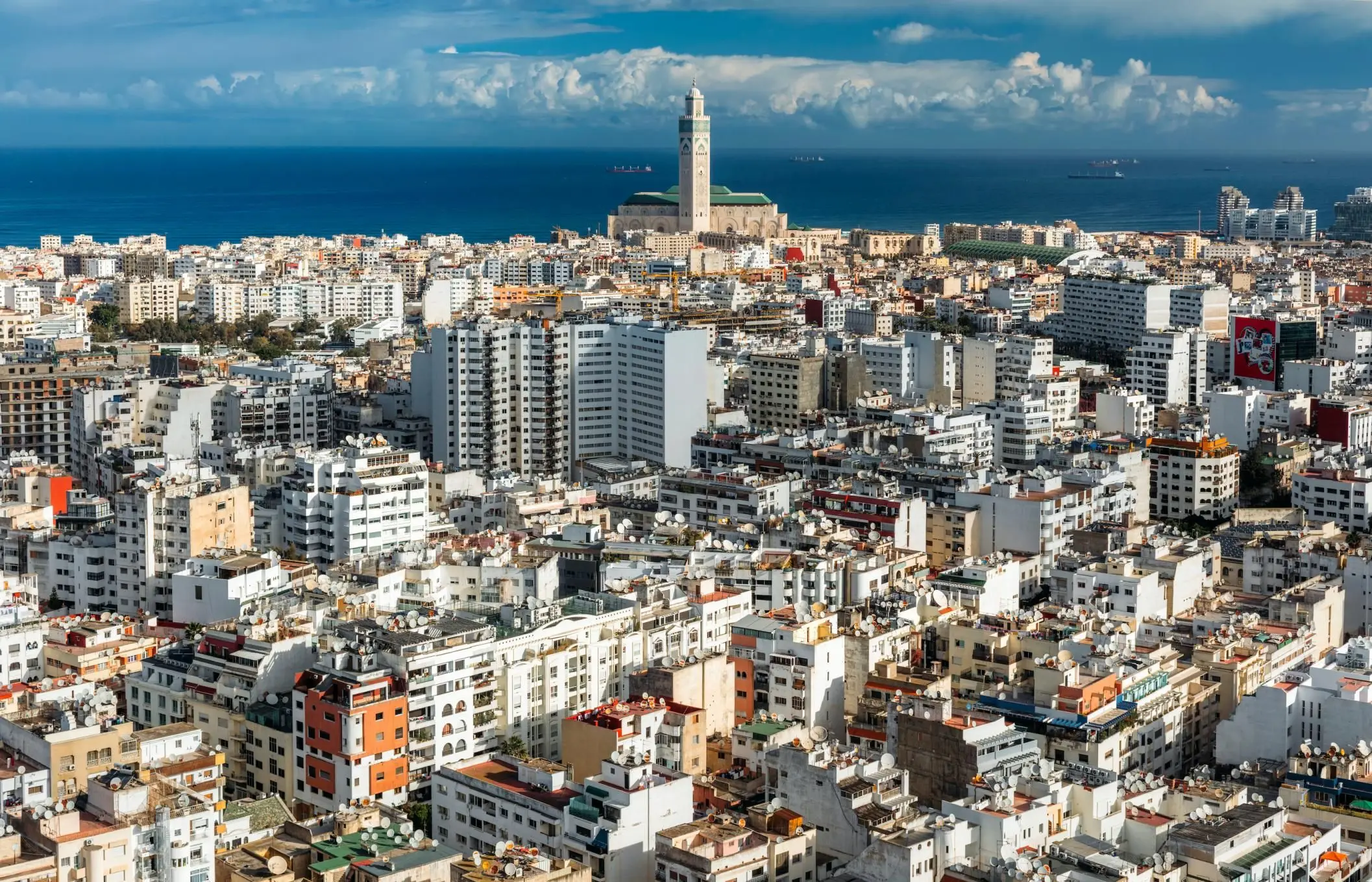
Introduction to Casablanca
Casablanca, Morocco’s largest city, plays a pivotal role in the country’s cultural and economic landscape. As a major financial center with a population exceeding 3.7 million, it is not only the beating heart of Morocco but also a city that reflects a fascinating blend of traditional and modern influences. Its culture and architecture tell stories of its historical significance as a port city and its evolution into a global metropolis.
A Brief History
Casablanca’s origins date back to the Roman Empire when it was known as Anfa. However, it became a notable city in the 20th century, particularly during the French colonial period when extensive development occurred. After World War II, Casablanca became famous for its role in the iconic film ‘Casablanca,’ which starred Humphrey Bogart and Ingrid Bergman, further embedding its image into global pop culture.
Cultural Significance
The city is rich in cultural influences, showcasing an array of architectural styles from Moorish to Art Deco. Notable landmarks include the Hassan II Mosque, a stunning example of modern Moroccan architecture, which stands on the Atlantic coast and is one of the largest mosques in the world. The mosque accommodates over 25,000 worshippers and features an intricately decorated interior and a towering minaret. Another point of interest is the old Medina, where visitors can explore narrow winding streets lined with shops and authentic eateries.
Current Events and Developments
Recently, Casablanca has been undergoing significant urban development aimed at enhancing its infrastructure. The completion of the Casablanca Tramway has improved public transportation, making it easier for residents and tourists to navigate the city. Moreover, the development of the Casablanca Technopark aims to foster technological innovation and entrepreneurial growth, attracting startups and tech companies to the region.
Conclusion
As Casablanca continues to develop and modernize, it remains a city that embraces its rich history while looking towards the future. It represents a unique convergence of tradition and innovation, making it an essential destination for travelers and a vital hub for the Moroccan economy. The ongoing developments signal a promising future, ensuring that Casablanca will remain a vibrant and significant player on both national and international stages.