What the data shows
What caused the loud explosion heard across Cleveland and surrounding areas on March 17, 2026? The answer lies in a meteor that broke the sound barrier, resulting in a sonic boom that startled residents and rattled windows.
A loud boom was reported around 9 a.m. EDT, with the National Weather Service suggesting that the sound was indeed caused by a meteor entering the Earth’s atmosphere. This event was powerful enough to be heard over industrial machinery, and reports of the phenomenon extended into neighboring states, including Pennsylvania and New York.
Residents described the sound as “earthquake-like,” and many were taken aback by the suddenness of the event. Betsy Kling, a local meteorologist, exclaimed, “We heard and felt a SONIC BOOM from a meteor coming in!” This sentiment was echoed by the National Oceanic and Atmospheric Administration (NOAA), which noted that such loud booms can cause anxiety in populated areas.
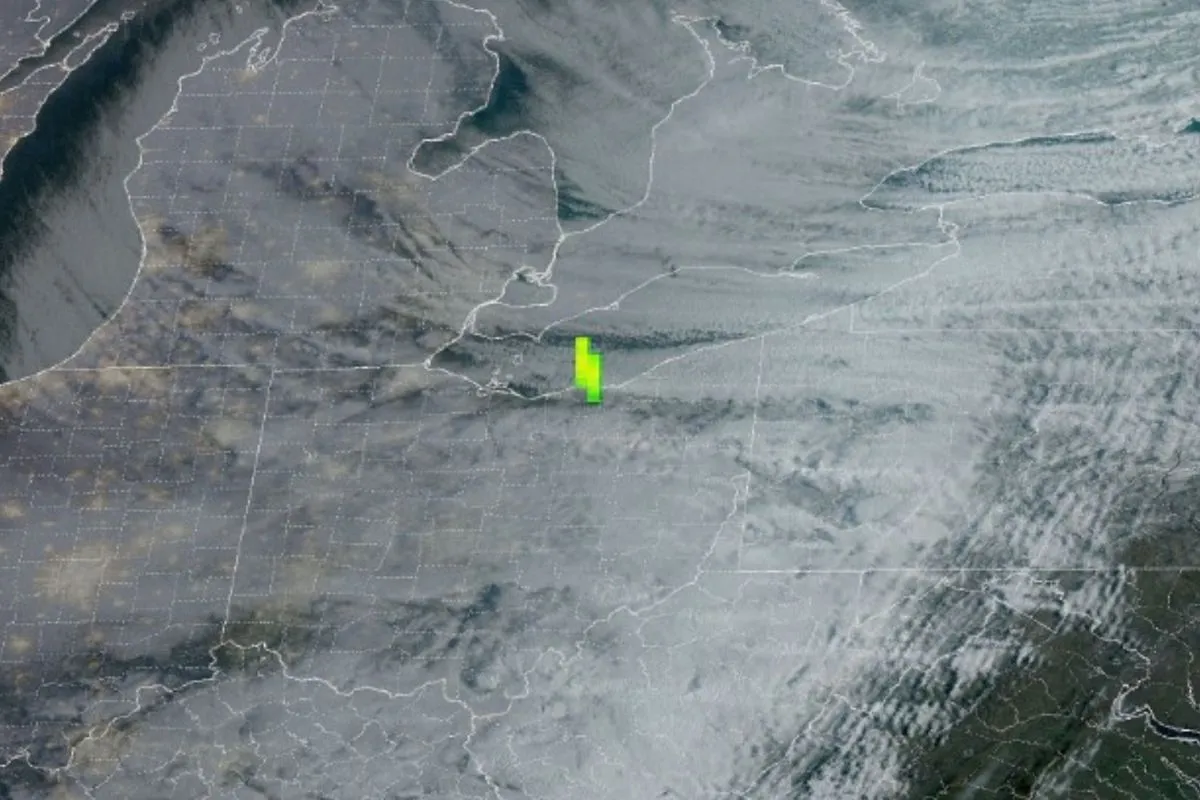
The National Weather Service in Cleveland confirmed the meteor event using satellite imagery, stating, “The latest GLM imagery does suggest that the boom was a result of a meteor.” The meteor was visible as a fireball in the sky, and the American Meteor Society received over 100 reports from multiple states regarding the event.
Interestingly, while the Chelyabinsk meteor event in 2013 resulted in injuries due to its sonic boom, there have been no reports of injuries related to the Cleveland meteor. This is a relief for residents who were startled by the loud noise, as the sonic boom was powerful yet did not cause any harm.
The meteor reportedly broke the sound barrier at a speed of 767 mph, leading to the sonic boom that was felt and heard across the region. The event serves as a reminder of the dynamic nature of our atmosphere and the phenomena that can occur, often without warning.
As investigations continue, details remain unconfirmed about the exact trajectory and size of the meteor. However, the event has sparked interest in meteorology and the study of near-Earth objects, highlighting the importance of monitoring such occurrences for future safety and awareness.