How it unfolded
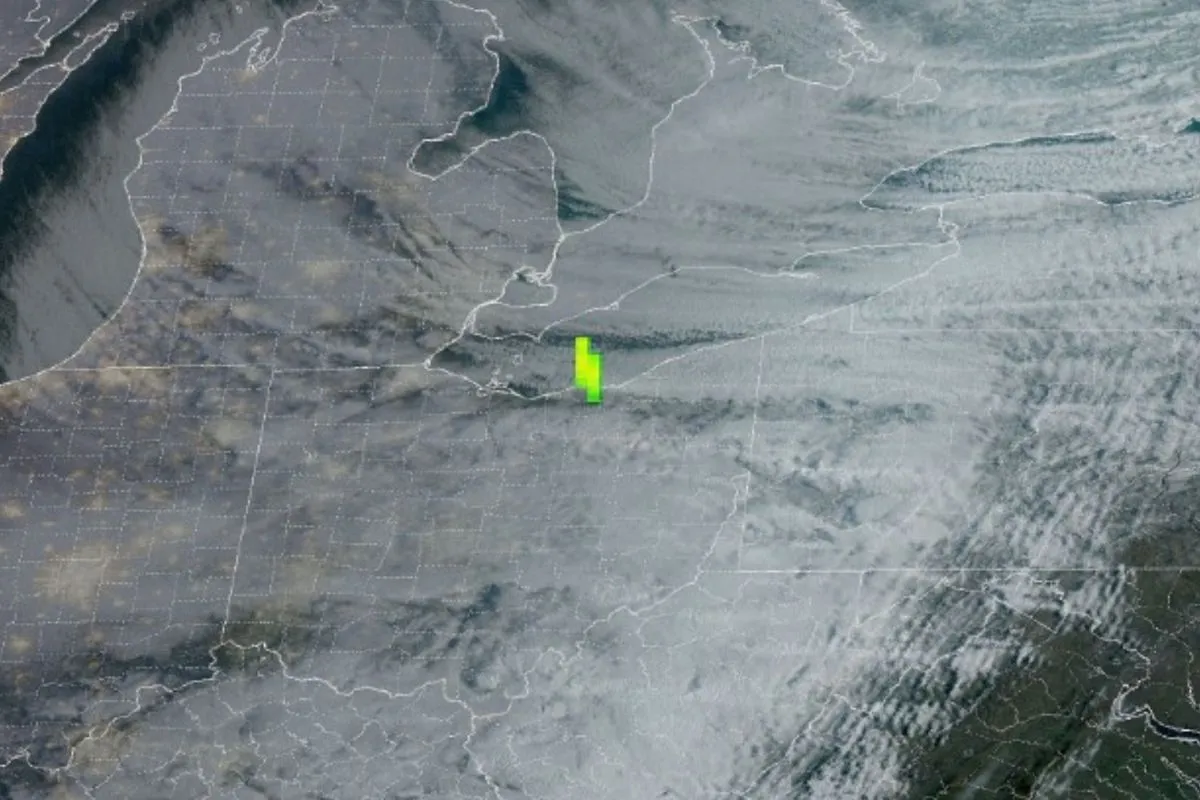
On the morning of March 10, 2026, at approximately 9 a.m., residents across northeast Ohio experienced a loud boom that sparked curiosity and concern. Eyewitness accounts describe the sound reverberating through the area, with one local resident, Jace, questioning, “Heard the loudest boom just now in northeast Ohio. People heard it as far as Avon. What was that? Meteor?” This incident was later confirmed by meteorologists to be associated with a meteor breaking the sound barrier.
The National Weather Service utilized Geostationary Lightning Mapper (GLM) imagery to analyze the event. They reported, “The latest GLM imagery does suggest that the boom was a result of a meteor.” This technology, primarily designed to track lightning, is also capable of detecting bright meteors, providing valuable insights into such occurrences.
As the meteor traveled at an impressive speed of 62,000 miles per hour, it was observed to disintegrate approximately 24 miles above Point Marion, Pennsylvania, after traveling 86 miles through the atmosphere. At its peak, the meteor was noted to be ten times brighter than the planet Venus, captivating skywatchers in the region.
In the days following the boom, sky enthusiasts were informed of heightened meteor activity expected that week. The Beta Tucanids meteor shower, known for its weak activity, was projected to peak starting on Friday. Typically, this meteor shower produces less than one meteor per hour, making it a rarity to witness significant activity.
Additionally, the Anthelion radiant, another meteor shower, is anticipated to produce about two meteors per hour during this period. The xi Herculids meteor shower, active from March 6 to March 20, is also expected to contribute to the celestial display, albeit with similar low activity levels.
Despite the excitement surrounding these meteor showers, uncertainties remain. The American Meteor Society has noted that it is unclear how these meteors will respond this year, with astronomers actively monitoring the situation. NOAA has also highlighted that the loud booms accompanying meteors entering Earth’s atmosphere can cause anxiety, especially in populated areas.
As of now, the exact activity level of the Beta Tucanids meteor shower this year is unclear. Observers are encouraged to keep an eye on the skies as the week progresses, hoping for a spectacular show. Details remain unconfirmed, and further updates will be provided as more information becomes available.