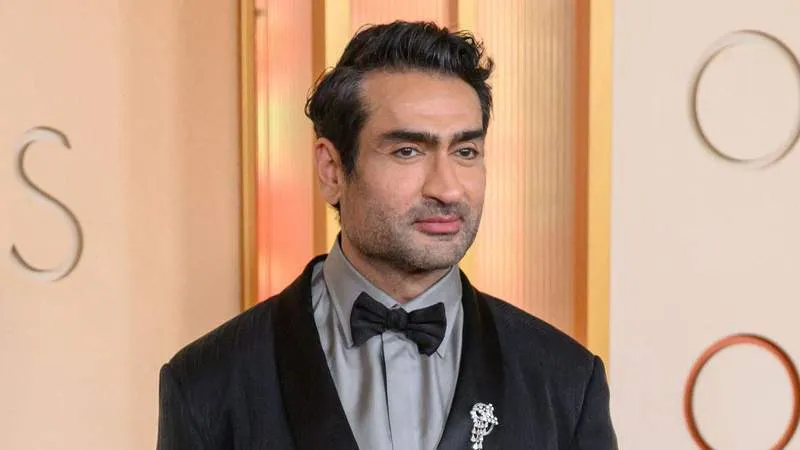
What happens when a joke crosses the line of good taste? This question was at the forefront of discussions following Kumail Nanjiani’s performance at the 2026 Oscars, where he made a controversial joke referencing the film ‘Schindler’s List’. Nanjiani, who was presenting the Best Live Action Short Film category, referred to the iconic film as ‘Schindler’s Post-It’, a quip that did not resonate well with the audience.
The backlash was swift and severe. Many in attendance responded with silence rather than laughter, and viewers at home took to social media to express their outrage. Comments flooded in, with one viewer stating, “Can’t say that Schindler’s List joke was uh in any good taste!” Another remarked, “A list isn’t a form of stationery, so ‘Schindler’s post-it’ doesn’t make any sense. bad joke.” This incident has since been labeled one of the most controversial moments of the Oscars.
Nanjiani’s joke, which some supporters defended as a play on words, has sparked a broader conversation about the boundaries of humor, especially in relation to sensitive historical subjects. One supporter argued, “It was a play on the title; it did not make fun of the Holocaust,” while another stated, “It was a mildly humorous play on words regarding the title of the film. Hardly inappropriate.” Nevertheless, the overwhelming response leaned towards condemnation, with some viewers even calling for Nanjiani to be banned from future Oscars.
The context of Nanjiani’s joke is significant. ‘Schindler’s List’ is a critically acclaimed film directed by Steven Spielberg, based on the true story of Oskar Schindler, who saved over 1,300 Polish-Jewish refugees from the Holocaust. The film’s serious subject matter makes it a sensitive topic, and jokes about it can easily be perceived as offensive. Nanjiani, a Pakistani-American comedian and actor, has previously been recognized for his work, including his role in ‘The Big Sick’, which was nominated for an Academy Award.
As the dust settles from this incident, it raises important questions about the role of humor in public discourse and the responsibilities of those in the spotlight. Nanjiani, now 47 years old, has built a career on his comedic talents, but this moment may redefine how he is perceived in the industry and by the public. The Oscars ceremony took place on March 15, 2026, and the fallout from Nanjiani’s joke continues to unfold.
Details remain unconfirmed regarding any official response from the Academy or Nanjiani himself about the incident. As discussions about the appropriateness of humor in sensitive contexts continue, it remains to be seen how this will impact Nanjiani’s career moving forward and whether he will address the controversy directly.
The incident serves as a reminder of the fine line comedians must walk when addressing historical tragedies and the potential consequences of crossing that line. As the conversation evolves, it will be interesting to observe how the entertainment industry navigates these complex issues in the future.