Celtic Triumphs in Tense Penalty Shootout
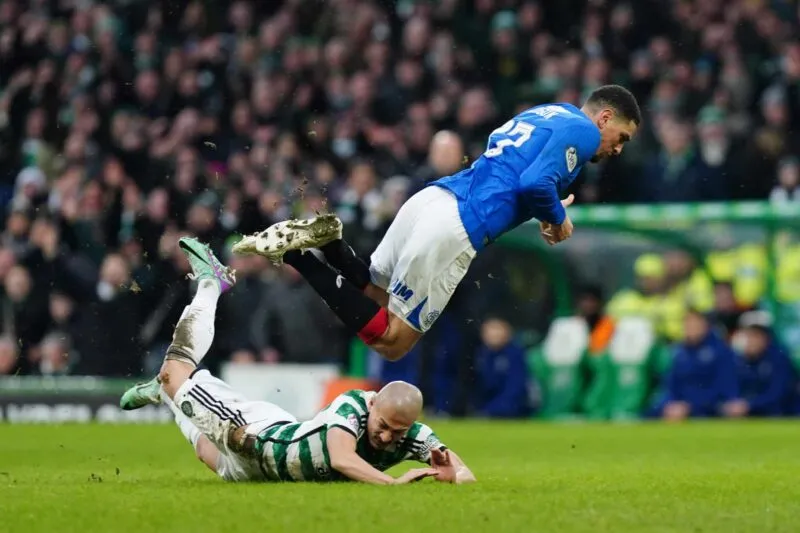
In a highly charged atmosphere at Ibrox Stadium, Celtic emerged victorious against their historic rivals, Rangers, in the Scottish Cup quarterfinal. The match concluded in a dramatic penalty shootout, with Celtic securing a 4-2 victory after a goalless draw over 120 minutes of play. This outcome not only knocked Rangers out of the tournament but also intensified the already fierce rivalry between the two clubs.
Despite the tension on the pitch, Celtic struggled to make an impact during regular and extra time, failing to register a single shot on target throughout the match. The game saw a disallowed goal for Celtic in the first half due to offside, while Rangers had a goal ruled out for handball by VAR in extra time. The lack of scoring opportunities highlighted the defensive strategies employed by both teams.
The penalty shootout itself was fraught with pressure, as Rangers’ James Tavernier and Djeidi Gassama both missed their attempts, paving the way for Celtic’s victory. The shootout concluded with a score of 4-2 in favor of Celtic, a result that will be remembered by fans for its intensity and the stakes involved.
However, the match was marred by incidents of violence and disorder among supporters. Following the conclusion of the penalty shootout, fans clashed on the pitch, leading to police intervention. Authorities apprehended a man after an incident involving a Celtic member of staff, and Celtic players were seen intervening in the chaos. The Scottish Football Association (SFA) condemned the behavior of supporters entering the field of play, calling it unacceptable.
Charlie Adam, a former player and commentator, expressed his disappointment regarding the events, stating, “It’s a sad day for Scottish football. For the Old Firm that we talk about being our leadership teams and [what] they represent, it’s an embarrassment for our game.” This sentiment reflects the broader concern about the implications of such violence on the reputation of Scottish football.
In response to the incidents, the SFA has launched an investigation to address the behavior of fans and the security measures in place during such high-stakes matches. Danny Rohl, a key figure in the aftermath, remarked, “I think we all know the emotional situation after a game. Nobody likes to see this,” emphasizing the need for better management of fan conduct.
As the dust settles from this tumultuous encounter, the future of fan behavior and security at Scottish football matches remains uncertain. The SFA’s investigation may lead to changes in how such events are managed, but for now, the focus will be on the implications of this match for both teams as they move forward in their respective campaigns.
Details remain unconfirmed regarding any further disciplinary actions that may arise from the incidents at Ibrox, but the rivalry between Rangers and Celtic continues to be a focal point of Scottish football, drawing attention from fans and authorities alike.