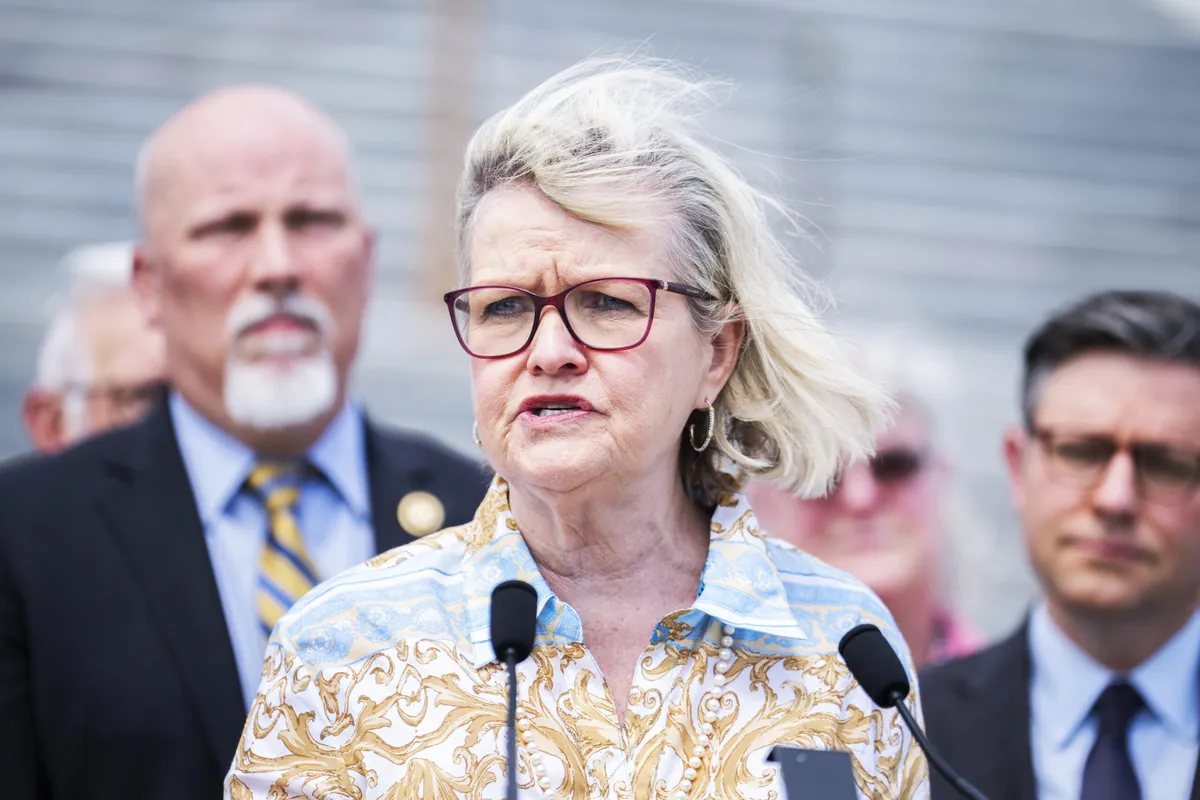
Who is involved
The SAVE America Act has emerged as a pivotal piece of legislation in the current political landscape, particularly as it relates to voting rights and election integrity. Prior to this development, there was a growing expectation among Republican leaders that voter ID laws would gain traction in Congress. The bill, which has already passed the House, is now awaiting a crucial vote in the Senate, where the dynamics are markedly different.
In a decisive moment, the SAVE America Act was propelled into the spotlight when Cleta Mitchell, a prominent figure in Republican circles, successfully pressured Senate leadership to bring the legislation to a vote. This act of advocacy has shifted the focus onto the bill, which mandates proof of U.S. citizenship to register to vote in federal elections. It also requires voters to present documentary proof of citizenship at registration and a photo ID at the polls. However, the bill faces significant hurdles in the Senate, where it currently lacks the necessary 60 votes to overcome a filibuster.
The immediate effects of this legislative push are palpable. Senate Republicans, holding 53 seats, are in a precarious position as they attempt to rally support for the SAVE America Act. The bill has garnered strong backing from key figures, including former President Donald Trump, who has made it clear that he will refuse to sign any bills unless the SAVE America Act is enacted. This ultimatum adds pressure on Senate Republicans to unify their efforts in support of the legislation.
On the other hand, Senate Democrats are uniformly opposed to the SAVE America Act, viewing it as an unnecessary barrier to voting that could disenfranchise eligible voters. This opposition underscores the stark contrast between the two parties on issues of voter access and election integrity. The debate surrounding the bill is expected to be intense, with discussions likely to extend throughout the week as both sides prepare for a showdown.
Experts have weighed in on the implications of the SAVE America Act, emphasizing the potential consequences for voter participation. Proponents argue that the legislation is necessary to address concerns about non-citizen voting, a claim that Trump has repeatedly asserted. Critics, however, contend that such measures disproportionately affect marginalized communities and could lead to a significant decrease in voter turnout.
As the Senate gears up for this critical vote, the stakes are high. The outcome remains uncertain, particularly given the solid opposition from Democrats. Details remain unconfirmed regarding the exact timing of the Senate vote, but the implications of this legislation could resonate far beyond the current political climate, shaping the future of voting rights in the United States.
In summary, the SAVE America Act represents a significant moment in the ongoing debate over voter ID laws and election integrity. With key figures like Trump and Mitchell advocating for its passage, and strong resistance from Senate Democrats, the coming days will be crucial in determining the fate of this contentious legislation.