As the World Cup concluded, the focus shifted to college football with the start of the Southeastern Conference (SEC) football media days. Oklahoma coach Brent Venables was among the first to speak at the event held in Tampa, Florida.
The SEC, often recognized for its college football prominence, has seen its long-standing dominance challenged in recent years. Despite the league’s self-proclaimed status, recent national championships in football have eluded the conference.
Big Ten’s Recent Success
The Big Ten conference has secured the last three national titles in football, with three different teams achieving this feat. In head-to-head matchups over the past three seasons, the Big Ten holds a 4-0 record against its conference rivals.
Financially, the Big Ten has also shown significant growth. While the SEC reported over $1 billion in earnings last year, the Big Ten generated $1.74 billion. This financial strength has been bolstered by a substantial media-rights deal and strategic expansion, extending the conference’s reach across the country.
The expansion efforts, led by former Big Ten commissioner Kevin Warren, included the westward growth of the conference. This, combined with the on-field success of teams like Oregon, which reached a College Football Playoff quarterfinal and a semifinal in two years, has contributed to a strong foundation for the Big Ten.
SEC’s Current Landscape
Despite the Big Ten‘s recent achievements, the SEC remains a significant power in college athletics. SEC Commissioner Greg Sankey highlighted the league’s overall success, noting that the SEC won 13 national championships across various sports in the past school year, surpassing its previous record of 10.
Sankey also emphasized the popularity of SEC football, stating it is the second most-watched sports property in the United States, behind only the National Football League. He added that SEC football programs average 80,000 fans per game, which he noted is the highest average attendance for any sport globally.
However, the SEC has experienced its longest football national championship drought since the period between 1999 and 2002. This dip coincides with the retirement of coach Nick Saban and a decline in some of the league’s traditional powerhouses. For instance, Auburn has had five losing seasons and an average of 6.9 wins per year since its 2013 national title, while Florida has gone through four head coaches since Urban Meyer, with none finishing higher than sixth nationally.
The upcoming season will see six new head coaches in the SEC: Alex Golesh at Auburn, Jon Sumrall at Florida, Will Stein at Kentucky, Ryan Silverfield at Arkansas, Pete Golding at Ole Miss, and Lane Kiffin at LSU. The conference is looking to these coaching changes to address its recent struggles and shape its future dynamics.
Power Four Conference Rankings
Entering the 2026 season, the SEC is still considered a top conference, known for its combination of elite national championship contenders, depth, and week-to-week difficulty. Teams such as Georgia, Texas, LSU, Alabama, Texas A&M, Oklahoma, Ole Miss, Tennessee, Florida, Auburn, and South Carolina are expected to compete for major bowl games or the expanded College Football Playoff.
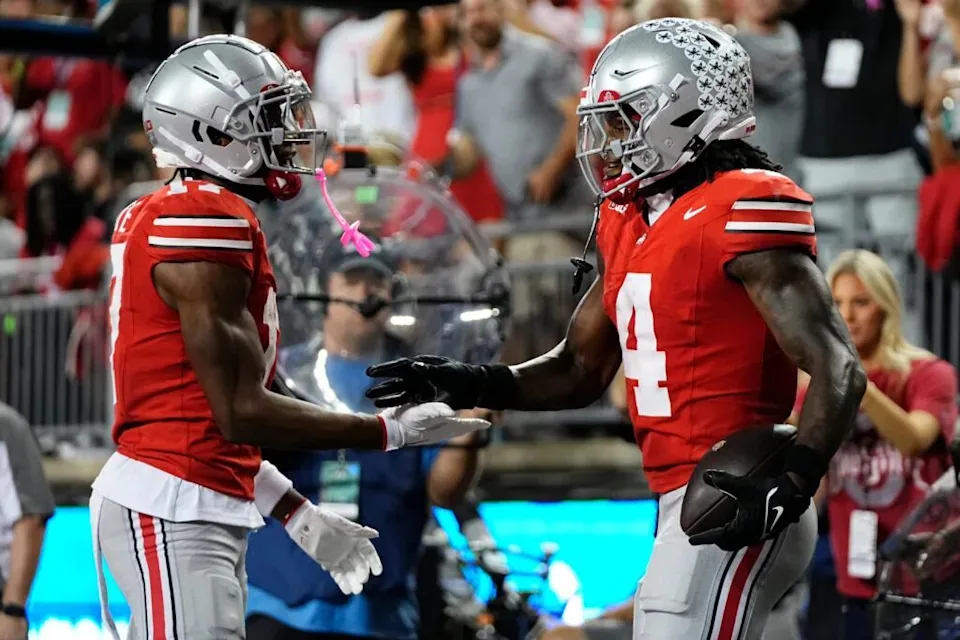
The Big Ten follows, recognized for its elite heavyweights like Ohio State, Indiana, and Oregon, which are considered national title contenders. USC and Michigan also possess the talent for deep playoff runs. However, the conference is noted for a drop-off in depth after its top teams, making it more top-heavy compared to the SEC‘s deeper middle class.
The Big 12 is ranked third, characterized by its unpredictability. While it may lack a clear national title favorite, teams like Utah, BYU, and Texas Tech are building momentum. The conference has depth, but a lack of star power is noted. The ACC is positioned fourth, facing more questions than answers, with Miami appearing to be its primary national contender. Other teams like Virginia, Clemson, Florida State, North Carolina, Louisville, and NC State face significant uncertainties.
The SEC remains the nation’s deepest and most complete conference, while the Big Ten is elite at the top but shows a noticeable drop after its contenders. The Big 12 is deep, competitive, and unpredictable, yet lacks a clear title-contending team. The ACC, led by Miami, has the most uncertainty and the least depth among the Power Four conferences.
Read Also
Source: cnn.com