Introduction
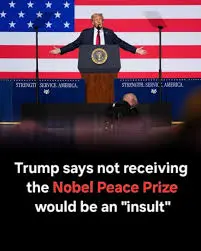
The topic of former President Donald Trump and the Nobel Peace Prize gained momentum in recent years as discussions around international diplomacy and peace agreements progressed. The Nobel Peace Prize is awarded to individuals or organizations that have made significant contributions to achieving or promoting peace. Given Trump’s controversial yet impactful approach to foreign policy, the debates surrounding his potential nomination have elicited diverse opinions.
Peace Agreements Under Trump’s Administration
During his presidency, Trump spearheaded several high-profile diplomatic efforts, notably the agreements between Israel and the United Arab Emirates (UAE), Bahrain, Sudan, and Morocco known as the Abraham Accords. These agreements, signed in 2020, represented a significant shift in Middle Eastern relations and were seen as a potential step toward long-term peace in the region.
Additionally, Trump’s direct negotiations with North Korea’s Kim Jong-un marked a historic attempt to ease tensions and foster dialogue between the two nations. The unprecedented summits, held in 2018 and 2019, aimed at denuclearization and establishing a new era of relations, though the outcomes remained largely unanswered as substantive agreements were not fully achieved.
Nomination and Controversies
In 2021, Trump was nominated for the Nobel Peace Prize by right-wing Norwegian politician Christian Tybring-Gjedde, who praised the former president for his role in the Abraham Accords. However, the nomination drew significant criticism, largely due to Trump’s confrontational style and policies that many viewed as divisive rather than unifying. Critics pointed to issues such as the handling of racial tensions within the United States and his approach to global alliances as factors that might disqualify him from this prestigious honor.
The Significance of the Nobel Prize
The Nobel Peace Prize remains one of the most prestigious awards in the world, reflective of an individual’s or group’s efforts to promote peace and resolve conflict. Trump’s candidacy has sparked a renewed conversation about the criteria for such awards, with some arguing that unconventional leaders can achieve extraordinary results while others contend that peace must come through processes of dialogue and concession rather than aggression.
Conclusion
As discussions continue about Trump’s legacy and the implications of his foreign policy decisions, the potential for a Nobel Peace Prize nomination remains a topic of interest. While some see his actions as deserving of recognition, others remain skeptical. This debate encapsulates the complexities of international relations and the multifaceted nature of peace, illustrating how perceptions of leadership influence public opinion and historical narratives.