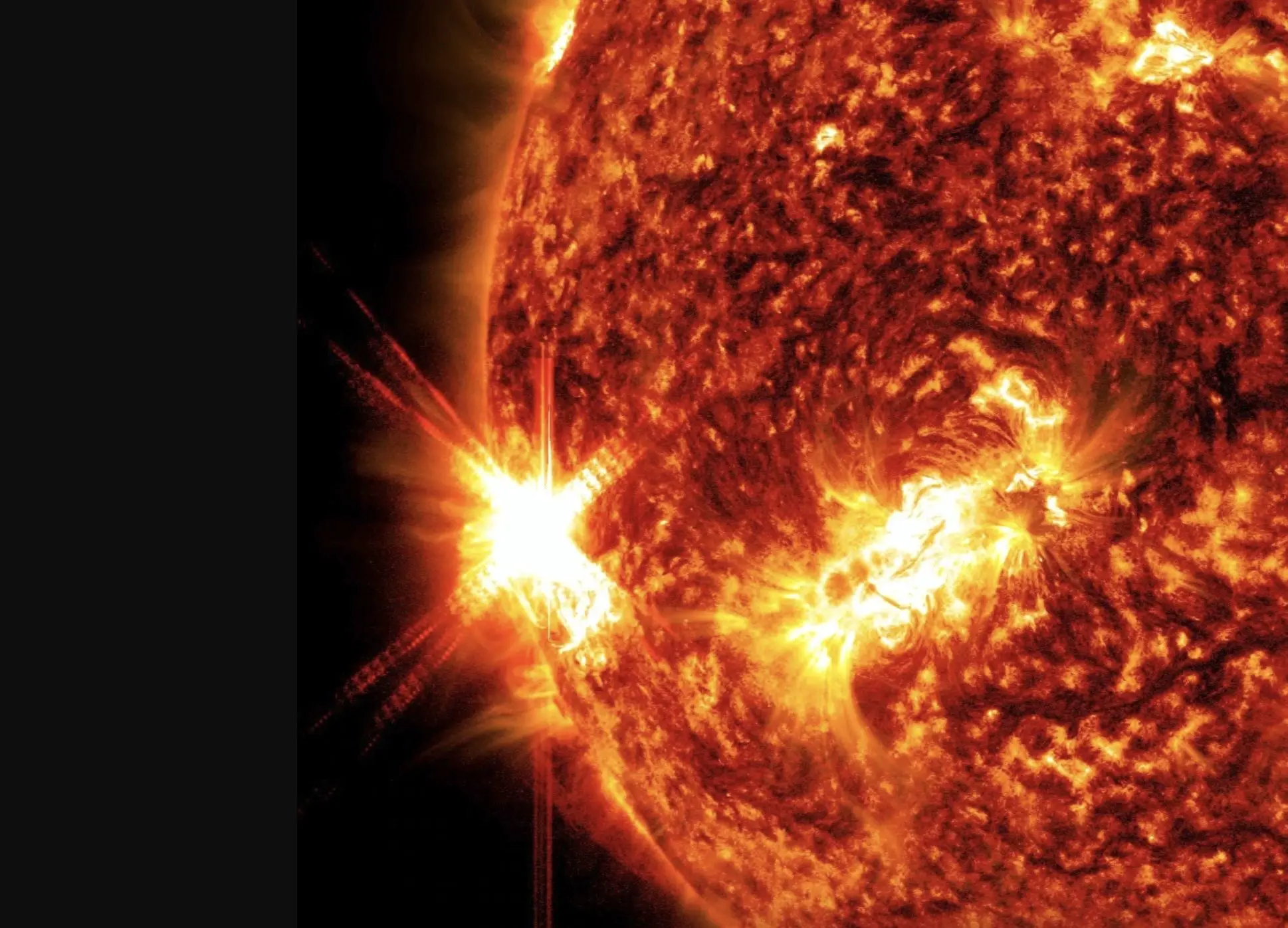
Introduction to Sun Solar Flares
Solar flares are intense bursts of radiation emanating from the sun’s atmosphere, caused by the release of magnetic energy stored in the solar corona. These phenomena are important not only for understanding solar dynamics but also for their potential impacts on Earth’s technology and climate. Recent solar flares have sparked interest among scientists, prompting further investigation into their effects and the clues they provide about solar activity.
What Are Solar Flares?
Solar flares occur when magnetic field lines on the sun become tangled and release energy. Classically measured in categories A, B, C, M, and X, flares can vary in intensity, with X-class flares being the most powerful. The energy emitted during a flare can be equivalent to millions of hydrogen bombs exploding at once, releasing energy across the entire electromagnetic spectrum, from radio waves to gamma rays.
Recent Solar Activity
In recent months, there has been a noticeable increase in solar flare activity, attributed to the solar cycle entering an active phase known as Solar Cycle 25. Notable flares in September 2023 included M-class and several X-class flares, causing spectacular auroras in northern latitudes and moments of radio blackout across the sub-Saharan region. These flares serve as a reminder of the sun’s influence on space weather, which can disrupt satellite communications, navigation systems, and power grids on Earth.
Impact on Earth and Technology
The consequences of solar flares can be significant. When a flare is directed towards Earth, it can lead to geomagnetic storms affecting electrical systems, satellites, and even astronauts in space who may be exposed to enhanced radiation levels. Scientists continuously monitor solar activity to predict these events, deploying instruments on satellites like NASA’s Solar Dynamics Observatory (SDO) and the Solar and Heliospheric Observatory (SOHO).
Conclusion and Future Outlook
As we continue to observe heightened solar activity, understanding solar flares becomes increasingly critical. The potential links to climate patterns on Earth and the direct effects on our technology underscore the need for ongoing research. Experts predict that as the solar cycle progresses, we can expect more frequent and intense flares, warranting increased readiness from electronic networks and satellite systems. Keeping abreast of solar activity not only aids in mitigating risks associated with solar flares but also enriches our understanding of star behavior and its broader implications in the universe.