The ongoing trend of portraying Donald Trump as a messianic figure has intensified following recent comments made by both Trump and Pope Leo XIV. The Pope, who is the first U.S.-born pontiff, has emerged as a vocal critic of U.S. foreign policy, particularly regarding the conflict with Iran. This situation has significant implications for both political and religious communities.
In a striking move, Trump recently posted an image of himself depicted as Jesus on his Truth Social account, further blurring the lines between politics and religion. This action has drawn criticism and support alike, reflecting the polarized views surrounding his presidency.
Trump has not held back in his criticism of Pope Leo XIV, labeling him as ‘weak’ and ‘terrible for Foreign Policy.’ He claimed that if he were not in the White House, the Pope would not be in the Vatican, suggesting that the Vatican’s choice of an American pope was a strategic move to manage relations with him.
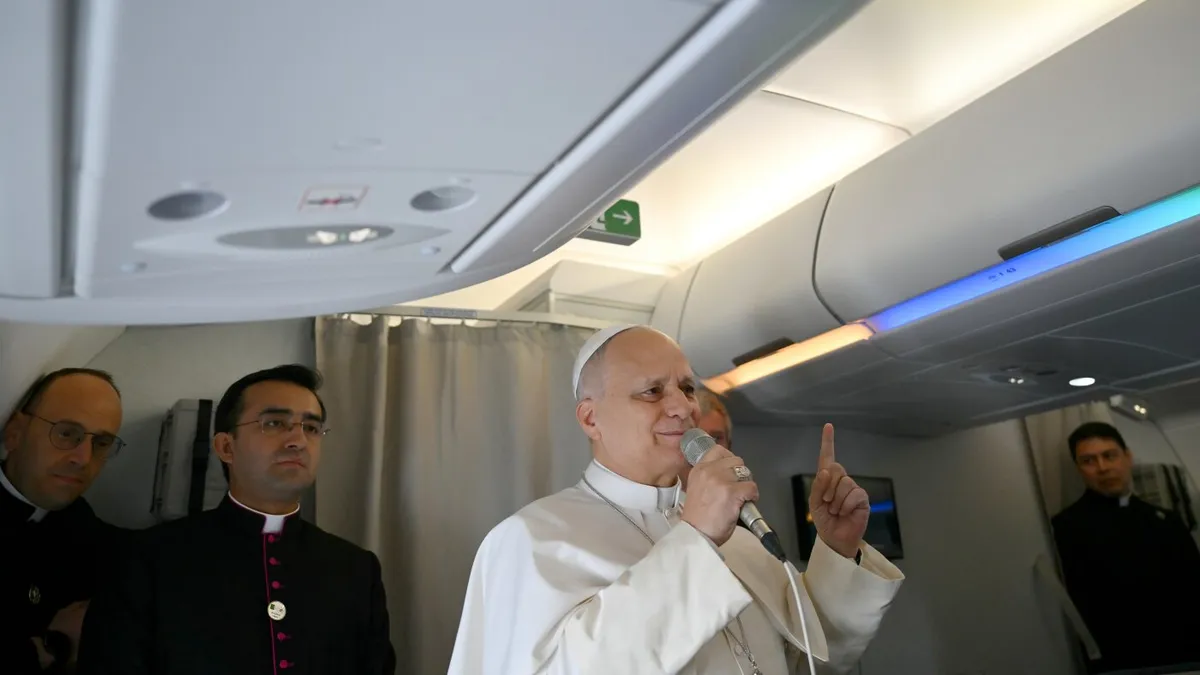
Pope Leo XIV, on the other hand, has emphasized the importance of peace and reconciliation, particularly in light of the ongoing Iran conflict. He stated, “I will continue to speak out loudly against war,” highlighting his commitment to advocating for the innocent victims of such conflicts.
During this period, Trump secured 55% of Catholic voters in the 2024 election, indicating a strong base of support among this demographic. However, the Pope’s stance against the ‘delusion of omnipotence’ that he believes is fueling the Iran war has positioned him at odds with Trump’s foreign policy approach.
As Pope Leo XIV embarks on an 11-day trip to Africa starting April 13, 2026, he has reiterated his call for peace, stating, “Too many people are suffering today, too many innocent people have been killed, and I believe someone must stand up and say that there is a better way.” This message starkly contrasts with Trump’s more aggressive rhetoric regarding Iran.
Italian politicians have shown support for Trump’s comments about the Pope, further complicating the relationship between the Vatican and the Trump administration. The dynamics of this relationship are crucial as they may influence broader geopolitical discussions.
As the situation develops, the implications of this rhetoric and the ongoing tensions between Trump and Pope Leo XIV remain uncertain. Details remain unconfirmed regarding how these interactions may affect future diplomatic relations and the Catholic Church’s influence on American politics.