Introduction
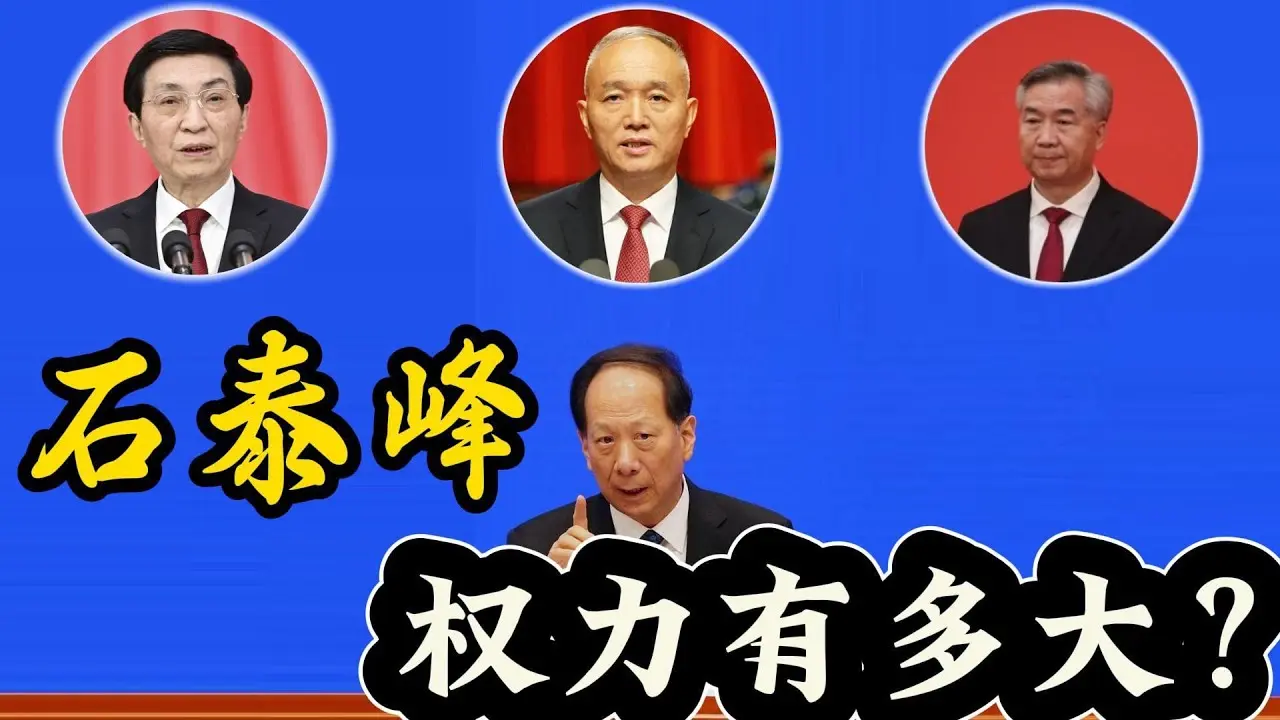
石泰峰, a prominent Chinese politician, has been making headlines as he takes on significant roles within the Chinese government. His recent developments are a critical reflection of China’s political landscape, where leadership changes can lead to shifts in policy, governance, and international relations. Understanding 石泰峰’s trajectory not only provides insights into his political strategies but also highlights the implications for China’s future.
Career Background
Born in 1965 in Hubei Province, 石泰峰 graduated from Central China Normal University. He began his career in local governance, holding various roles in Hubei and later in the national government. His rise to prominence started when he served as the Vice Governor of Hubei Province before transitioning to work with the National People’s Congress (NPC), where he gained recognition for his advocacy on economic policies and reforms.
Recent Political Developments
Recently, 石泰峰 was appointed as the Secretary of the Xinjiang Production and Construction Corps, a significant role considering Xinjiang’s strategic importance in China. His appointment is not just a career milestone; it represents a continuity in Xi Jinping’s leadership doctrine. 石泰峰 has been actively engaging with local issues, focusing on stability, development, and inter-ethnic relations, thereby underscoring the Party’s approach to governance in the region.
Public Perception and Impact
Public perception of 石泰峰 is largely shaped by his initiatives aimed at economic development and social stability. He is viewed as a pragmatic leader who prioritizes economic growth while navigating complex socio-political challenges. His efforts in Xinjiang, particularly in promoting economic initiatives and addressing grievances, are seen as part of a broader strategy by the Chinese government to ensure regional stability.
Conclusion
The trajectory of 石泰峰’s career represents more than an individual’s rise in the political arena; it reflects broader trends in China’s governance and policy direction. As China continues to navigate through domestic and international challenges, leaders like 石泰峰 will play a vital role in shaping future policies. For readers, monitoring 石泰峰’s initiatives can provide essential insights into the evolving political landscape in China and its global implications.