Wærenskjold Claims Historic Stage Win
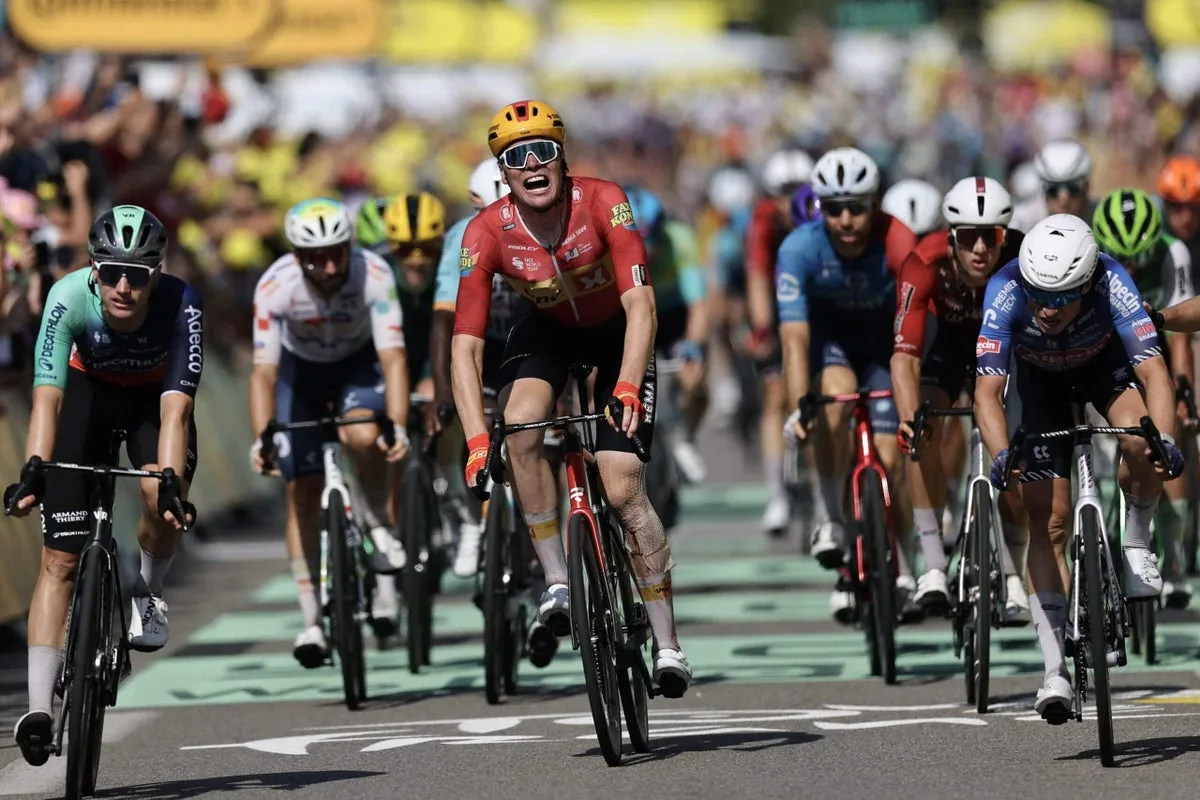
Søren Wærenskjold of Uno-X Mobility secured a notable victory in the Tour de France, winning the 11th stage in a sprint finish in Nevers. This stage was recorded as the fastest road stage in the race’s history, with an average speed of 50.9 kilometers per hour. The Norwegian rider’s win comes five days after his teammate, Torsten Træen, exited the Tour while wearing the yellow jersey.
The stage, which took the peloton from Vichy to Nevers, was characterized by its rapid pace from the outset. Despite the challenging conditions, including extreme heat in this edition of the Tour, Wærenskjold managed to outperform established sprinters. He described the win as his biggest success to date, noting that he felt tired at the start but gained adrenaline in the final moments.
The stage saw a four-man breakaway form early on, including Julian Alaphilippe, Anthon Charmig, Nelson Oliveira, and Mathis Le Berre. However, their advantage never exceeded 90 seconds, a common trend in this year’s Tour. Alaphilippe, a former world road race champion, was dropped approximately 38 kilometers from the finish line on the Côte-de-Chevannes. The remaining trio were eventually caught by the peloton just 5 kilometers from Nevers, setting the stage for the frenzied bunch sprint.
Peloton Navigates Record Speed and Challenges
The 11th stage’s average speed of 50.9 kilometers per hour surpassed the previous record set in 1999, which was 50.36 kilometers per hour. This achievement highlights the evolving nature of cycling, with advancements in bike technology and a consistent tailwind contributing to the high speeds. Wærenskjold himself expressed surprise at the record, mentioning that the stage didn’t feel exceptionally hard due to the tailwind and the peloton’s tendency to keep breakaways within a short time frame.
The high pace meant that teams with sprinters had to prepare for a demanding finish. Team Visma | Lease a Bike, for instance, reported that their riders, including Jonas Vingegaard, finished the stage safely despite the intense speed. Marc Reef, the team’s sports director, noted that the high pace minimized nervousness in the peloton, allowing Vingegaard to remain well-positioned among his teammates.
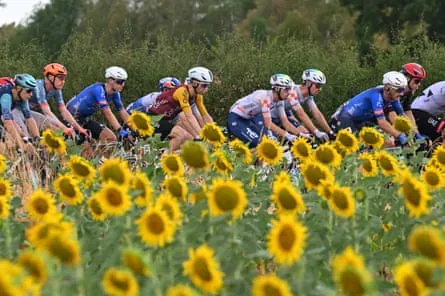
Race leader Tadej Pogačar also experienced a moment of concern during the stage, narrowly avoiding a crash after running over a loose bottle. He emphasized the need for continuous focus throughout the stage, even on days that might seem less challenging. Despite the incident, Pogačar and his UAE Emirates XRG team maintained their control over the peloton, with rivals acknowledging his current strength. Kévin Vauquelin of the Netcompany Ineos team remarked on the difficulty of challenging Pogačar’s dominance, stating that it is tough on breakaways when a team possesses such strength.
Sprint Finish Dynamics and Rider Reactions
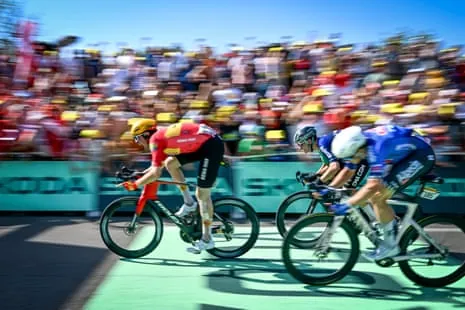
In the final kilometers leading into Nevers, the tight roads created a tentative run-in, with sprinter teams holding back until the last 2 kilometers. Decathlon attempted to organize a lead-out for Olav Kooij, with Cees Bol launching early at around 600 meters to go. This move created a significant gap, which Wærenskjold exploited by finding a small opening on the right side of the road. He then moved into Bol’s slipstream before powering past him.
Jasper Philipsen of Alpecin-Premier Tech and Olav Kooij closed in as they approached the finish line, but Wærenskjold held on for the victory. This marks only Uno-X’s second stage win in the Tour de France. Philipsen was initially relegated from third place due to deviating from his line but was later reinstated after a review.
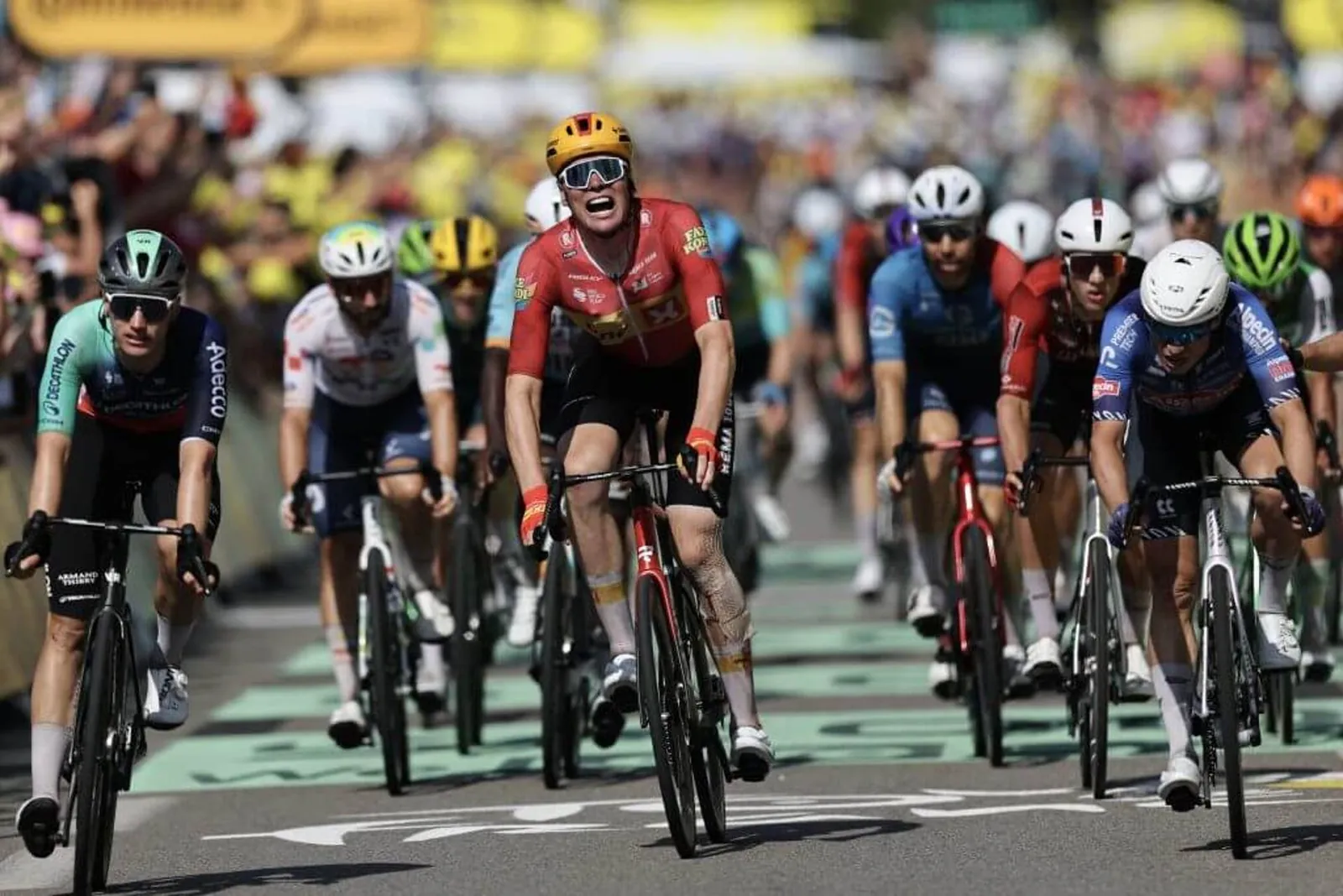
Wærenskjold’s performance was particularly impressive given that he had finished last in the previous stage after a crash that injured his hand. He expressed his disbelief at the win, stating that he thought he was too far back before an opening appeared. The stage also saw Anthon Charmig of Uno-X awarded the most combative rider prize for his efforts in the breakaway.
Read Also
Source: theguardian.com