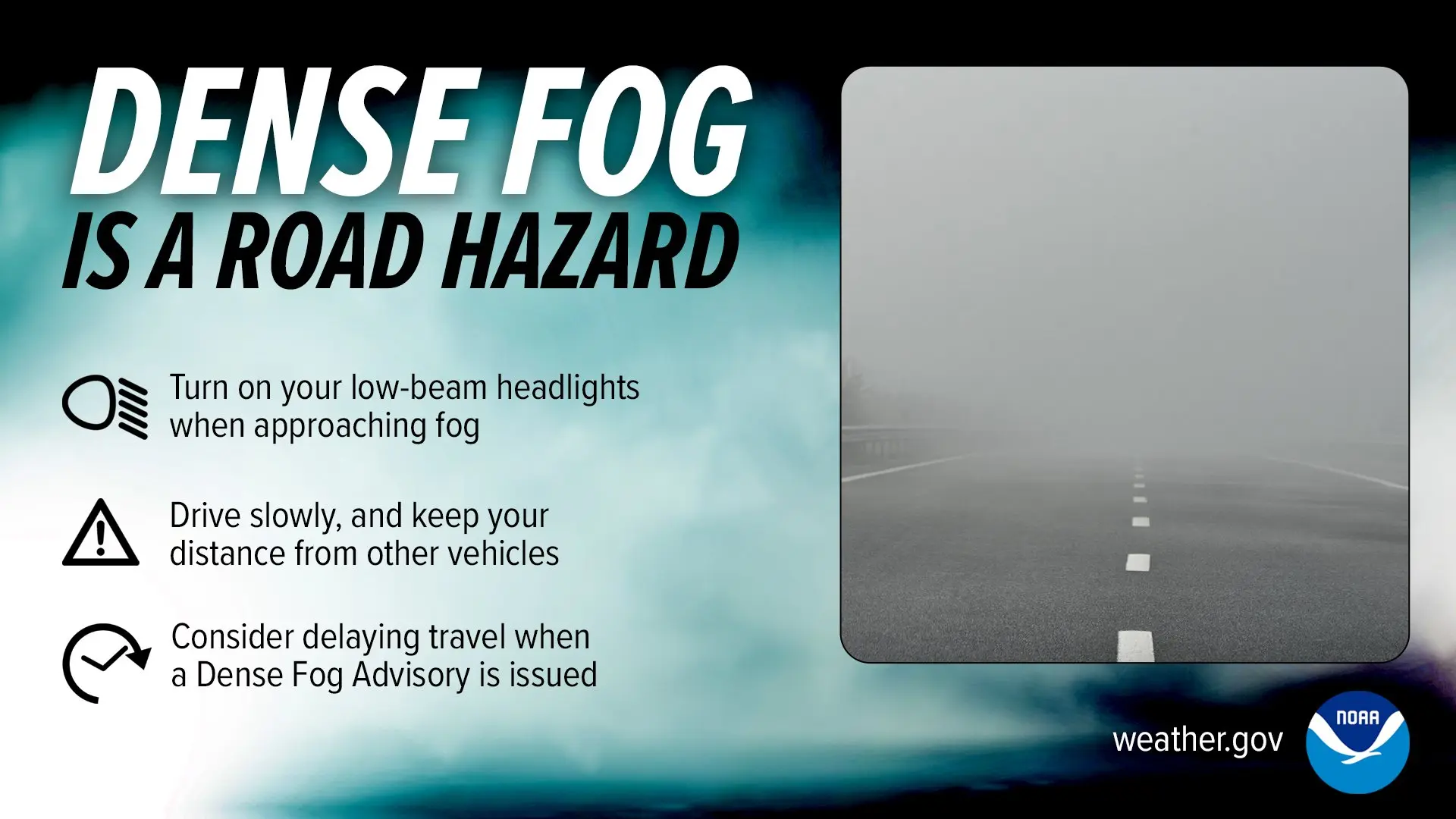
Introduction: The Importance of Dense Fog Advisory
As winter approaches, dense fog advisory becomes a common alert issued by weather services across the United States. This warning is crucial as it indicates visibility conditions that can be hazardous for driving and outdoor activities. Understanding these alerts not only keeps individuals safe but also helps communities prepare for potential disruptions caused by fog.
The Nature of Dense Fog
A dense fog advisory is typically issued when visibility is reduced to less than a quarter of a mile (.4 kilometers) due to fog. This phenomenon occurs when moisture in the air condenses into tiny water droplets, creating a thick layer of fog. Weather experts emphasize that fog can form suddenly and is often more common in low-lying areas, near bodies of water, and during temperature inversions when warm air traps cooler air at the surface.
Recent Events and Impact
Recently, several regions in the Midwest experienced thick fog, prompting officials to issue dense fog advisories. In places like Chicago and Indianapolis, transportation was significantly affected, with multiple accidents reported due to reduced visibility. The National Weather Service (NWS) has urged motorists to exercise caution, reduce speed, and utilize fog lights when navigating through such conditions. Moreover, local airports reported delays and diversions as flights were disrupted by heavy fog.
Safety Tips During a Dense Fog Advisory
When a dense fog advisory is in effect, there are several safety measures that individuals can take:
- Drive Carefully: Reduce your speed, increase your following distance, and use low beam headlights.
- Stay Informed: Regularly check weather updates and heed local news for any immediate alerts.
- Avoid Non-Essential Travel: If possible, postpone trips during thick fog conditions to minimize risk.
Conclusion: The Significance of Awareness
Being aware of dense fog advisories can significantly reduce the risks associated with this weather phenomenon. As climate variability increases, the frequency and intensity of fog events may also change, making it essential for communities to adapt and educate residents on how to respond to weather alerts. With ongoing advancements in weather forecasting and public awareness initiatives, it is crucial that individuals remain vigilant, ensuring not only their safety but also that of those around them.